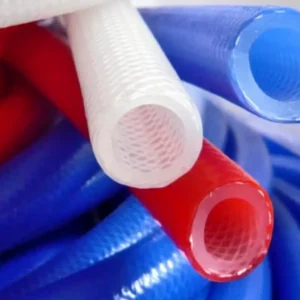
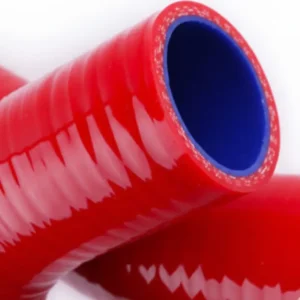
Oxygen hoses are designed to safely transport oxygen in medical, industrial, and other specialized applications. Their color can help users quickly identify the hose and its intended purpose, but color conventions may vary by industry, region, and manufacturer. Understanding oxygen hose colors is important for proper identification, safe handling, and preventing costly connection mistakes.
In this guide, we’ll explain what color oxygen hoses commonly are, how color codes are used, and which standards may influence hose identification. We’ll also explore different oxygen hose applications and provide practical tips for selecting the right hose based on pressure, material, connection type, and operating environment.
What is an Oxygen Hose?
An oxygen hose is a specialized flexible tube designed to safely transport oxygen from a source to equipment or tools. Commonly used in welding, cutting, medical, and industrial applications, it is made from durable materials resistant to pressure, heat, and chemical reactions.
Benefits of Oxygen Hoses
- Safe Oxygen Transportation: Oxygen hoses are specifically designed for oxygen service, helping transport oxygen from cylinders, concentrators, or supply systems to intended equipment. Properly manufactured hoses provide reliable connections and reduce the risk of leakage, contamination, or material degradation during normal operation.
- Flexible and Easy to Handle: Their flexible construction allows oxygen hoses to bend and move around equipment without requiring rigid piping. This makes installation and operation more convenient, particularly where users need to reposition tools, medical equipment, or oxygen delivery systems frequently.
- Good Pressure Resistance: Quality oxygen hoses are engineered to handle the pressure requirements of their intended application. Suitable reinforcement and construction help the hose maintain its shape and performance under working conditions, providing dependable oxygen flow while reducing the possibility of premature hose damage.
- Chemical and Environmental Resistance: Depending on their construction, oxygen hoses can resist exposure to oils, abrasion, temperature changes, and other environmental factors. Selecting a hose with suitable material properties helps maintain performance when the hose is used in demanding industrial or outdoor environments.
- Wide Range of Applications: Oxygen hoses are available for different applications, including medical oxygen delivery, welding equipment, cutting systems, and industrial gas handling. We can select different sizes, materials, pressure ratings, and connection configurations according to the specific operating requirements of each application.
What Color Are Oxygen Hoses?
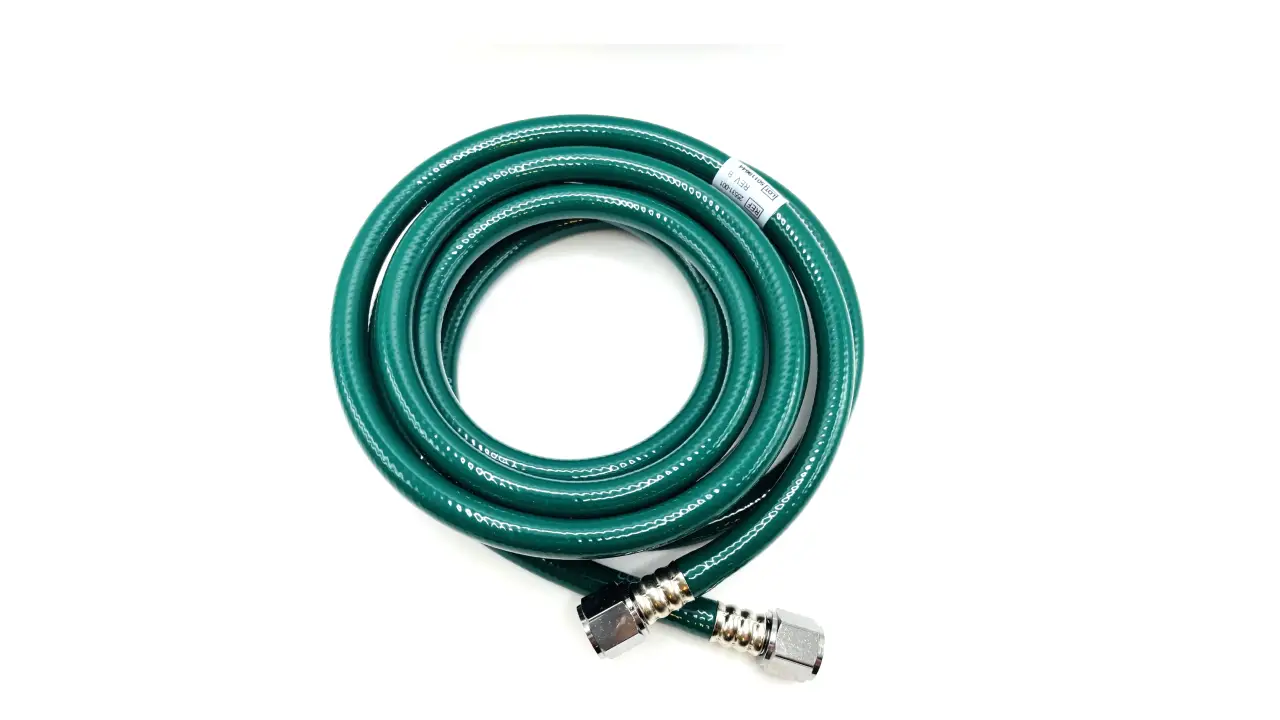
Oxygen hose colors can vary depending on the application, industry, and regional standards. There is no single universal color used for every oxygen hose worldwide. However, certain colors are commonly associated with oxygen service and can help users quickly identify hoses.
Always verify the manufacturer’s specifications and applicable standards before relying on color alone.

- Green Oxygen Hoses: Green is commonly associated with oxygen hoses, particularly in welding and gas-handling applications. This color helps users visually distinguish oxygen lines from hoses carrying other gases. However, green should be treated as an identification aid rather than the only method for confirming hose contents.
- Blue Oxygen Hoses: Blue oxygen hoses are also available, especially for certain medical, industrial, and specialized applications. Manufacturers may use blue to provide easy visual identification within a particular system. Because color conventions differ, we should always check product markings, labels, and specifications before connecting an oxygen hose.
- White Oxygen Hoses: White hoses may be used for oxygen delivery in some medical and specialized applications. Their clean appearance can also suit healthcare environments. However, white does not universally mean oxygen, so users should confirm the hose’s intended gas, pressure rating, material, and certification before installation or operation.
- Color-Coded Welding Hoses: In welding systems, hose colors are often used to distinguish different gases and reduce connection errors. Oxygen hoses are commonly identified separately from fuel-gas hoses through established color conventions. Since practices can vary between regions and manufacturers, checking applicable standards remains essential for safe gas handling.
- Manufacturer-Specific Colors: Some manufacturers choose colors based on their product ranges, branding, or customer requirements. Therefore, an oxygen hose may not always have the color we expect. The hose markings, specifications, and application requirements should take priority over visual color when identifying an oxygen hose.
Common Oxygen Hose Colors by Application
| Hose Color | Common Application | Important Note |
|---|---|---|
| Green | Welding and industrial oxygen | Commonly associated with oxygen service |
| Blue | Medical or specialized oxygen systems | Used by some manufacturers and applications |
| White | Medical and specialized applications | Color conventions vary by region |
| Other Colors | Manufacturer-specific applications | Always check markings and specifications |
Why Is the Oxygen Hose Color Important?
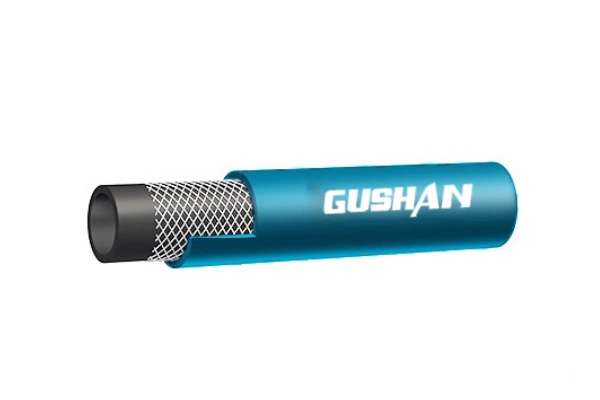
Choosing the correct oxygen hose color is crucial for safety and efficiency. Proper color coding prevents accidents, ensures quick identification, and maintains compliance with industry standards. Understanding the significance of these colors helps workers handle gases confidently and reduces the risk of costly errors.
- Safety assurance: Correct hose colors prevent mixing oxygen with other gases, reducing the risk of fire, explosion, or equipment damage. Visual identification allows workers to respond quickly in emergencies, maintaining a safe working environment and protecting personnel from hazardous incidents.
- Industry compliance: Many industries follow standardized color codes for gas hoses. Using the right oxygen hose color ensures compliance with regulations and guidelines, avoiding penalties and promoting consistent operational practices across facilities where multiple gases are in use.
- Operational efficiency: Color-coded hoses help workers easily distinguish oxygen lines from other gases, saving time and reducing mistakes. This clarity allows teams to focus on tasks without confusion, improving workflow, accuracy, and overall productivity in industrial, medical, or welding environments.
- Maintenance and troubleshooting: Clearly marked hoses make identifying issues faster during inspections or repairs. Workers can quickly locate oxygen lines for testing, replacement, or maintenance, preventing downtime, equipment failure, or accidental cross-connections that could disrupt operations or compromise safety.
Different Oxygen Hose Colors
Oxygen hoses are color-coded to ensure safety and easy identification in industrial, medical, and welding applications. Oxygen hoses are typically green or blue, signaling their role as oxidizing gases that support combustion. This clear visual distinction helps prevent dangerous mix-ups with fuel gases or inert gases, ensuring proper handling during operations.
Other common gas hoses follow similar color standards. Acetylene hoses are red, indicating fuel gas, while propane or propylene hoses are orange, also for fuel use. Inert gases like argon use black hoses, serving as shielding gas in welding or industrial processes. Using the correct hose color enhances safety, efficiency, and compliance across all applications.
| Gas Type | Hose Color | Purpose |
| Oxygen | Green or Blue | Oxidizing gas (combustion supporter) |
| Acetylene | Red | Fuel gas |
| Propane/Propylene | Orange | Fuel gas |
| Inert Gas (e.g., Argon) | Black | Shielding gas |
The Material and Structure of an Oxygen Hose
Beyond the color, an oxygen hose is specially designed in both material and structure to ensure absolute safety when transporting high-pressure oxygen. The oxygen hose typically uses a multi-layered composite structure, with each layer playing a vital role.
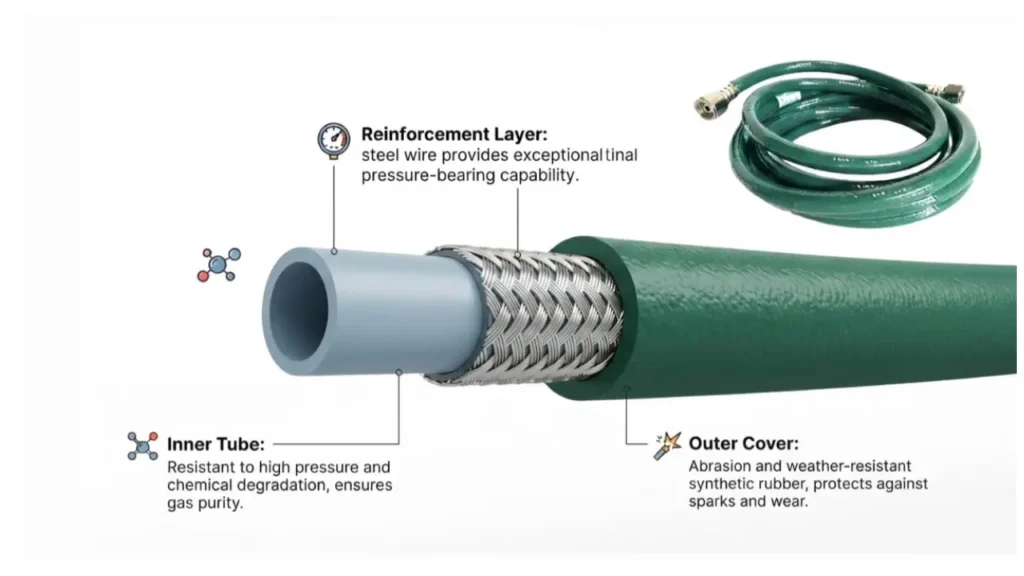
- Inner Tube: Made from a specific synthetic rubber compound, this material is designed to be resistant to high pressure and chemical degradation. It ensures the inner wall of the hose does not react with pure oxygen, guaranteeing the purity of the gas and the safety of the system.
- Reinforcement Layer: The hose’s core usually has one or more layers of braided fibers or high-tensile steel wire. This reinforcement provides the hose with its exceptional pressure-bearing capability, preventing it from expanding or bursting under working pressure.
- Outer Cover: The outer layer, or the “skin” of the hose, is also made of a durable, abrasion-resistant, and weather-resistant synthetic rubber. It is designed to withstand sparks, heat from welding operations, and the daily wear and tear from being dragged.
How to Choose the Right Oxygen Hose?
Choosing the right oxygen hose is essential for safety, efficiency, and durability. Consider factors like material quality, pressure rating, length, and flexibility. Ensure the hose color matches industry standards to prevent gas mix-ups.
Selecting the proper hose protects equipment, supports smooth operations, and reduces the risk of accidents.
- Check for Certifications: Make sure the hose is compliant with ISO 3821 or other local quality and safety certifications. These certifications are your authoritative guarantee of the product’s quality and performance.
- Confirm Working Pressure: The hose’s working pressure must match the maximum output pressure of your regulator, with an additional safety margin. Never use a hose with a pressure rating that is lower than what your system requires.
- Choose the Right Size and Length: The inner diameter (ID) of the hose should match your equipment to ensure a stable gas flow. The length should be long enough for you to move freely in your work area but not so long that it becomes a tripping or tangling hazard.
- Consider Twin-Line Hoses: For oxy-fuel welding, we often use a twin-line hose, where the oxygen hose (green) and the fuel gas hose (red) are bonded together. This design not only keeps the hoses organized but also physically prevents them from being mixed up, making it a highly recommended choice.
Maintenance and Safety Checks for Oxygen Hoses
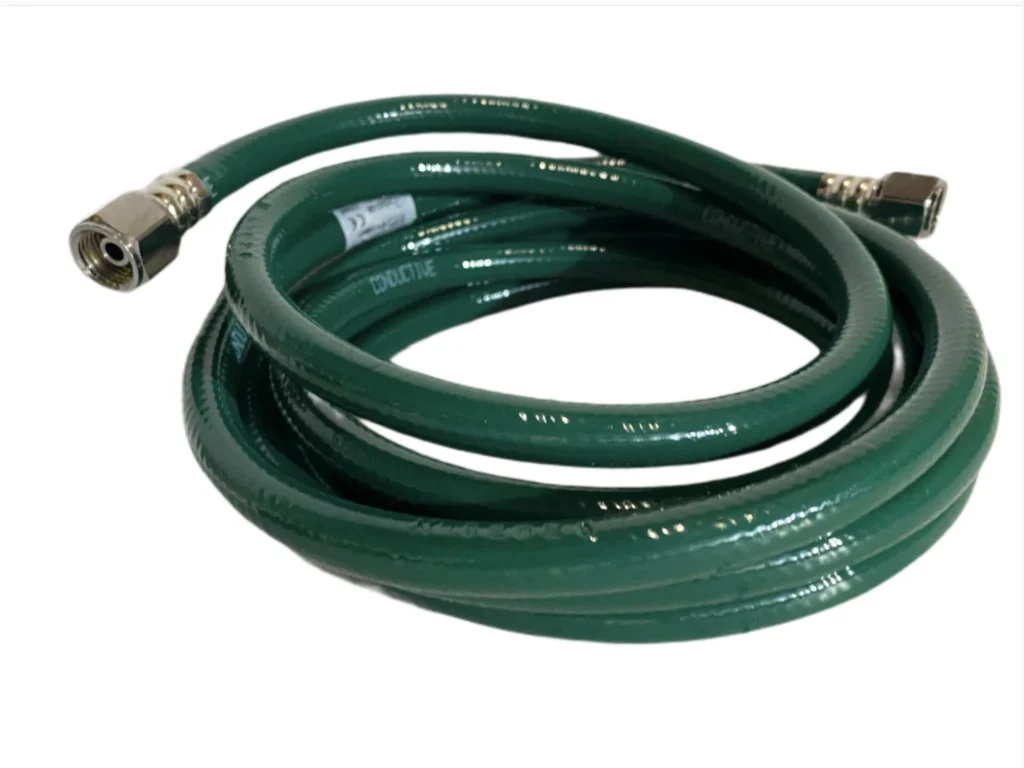
Regular maintenance and safety checks are essential for oxygen hoses to ensure safe and efficient operation. Inspecting hoses prevents leaks, wear, and accidental gas mix-ups. Consistent monitoring and proper care extend hose life and protect workers from potential hazards in industrial, medical, and welding environments.
- Visual inspections: Check hoses regularly for cracks, abrasions, or discoloration. Damaged hoses can lead to leaks, reduced performance, or dangerous gas exposure. Identifying wear early allows timely replacement, maintaining safety and preventing costly downtime or accidents in operations that rely on pressurized gases.
- Connection and fittings check: Ensure hose fittings are tight, secure, and compatible with the equipment. Loose or incompatible connections can cause gas leaks, pressure drops, or equipment failure. Properly maintained fittings guarantee consistent gas flow and safe, reliable operation.
- Pressure and flow testing: Periodically test hoses for proper pressure and flow performance. This ensures the oxygen delivery meets operational requirements and prevents over-pressurization or blockages. Maintaining correct pressure helps protect equipment and enhances safety during use.
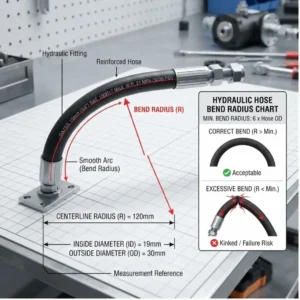
- Storage and handling: Store hoses away from heat, sharp objects, and chemicals that can degrade material. Avoid kinking or bending hoses excessively, as this can cause internal damage. Proper storage and handling extend hose life and maintain safety standards.
How Long Do Oxygen Hoses Last?
Oxygen hose lifespan depends on material quality, usage, and maintenance. Typically, hoses last 5 to 10 years under normal conditions, but exposure to heat, chemicals, or physical damage can shorten their life. Regular inspections, proper storage, and careful handling help extend durability, ensuring safe and reliable oxygen delivery for industrial, medical, or welding applications.
Can Oxygen and Acetylene Hoses Be Used Interchangeably?
No, oxygen and acetylene hoses should never be used interchangeably. Each hose is specifically designed for the properties of the gas it carries, including pressure, chemical compatibility, and flexibility.
Using the wrong hose can lead to dangerous leaks, fires, or explosions. Oxygen hoses are green or blue for oxidizing gas, while acetylene hoses are red for fuel gas. Always use hoses according to their designated gas type to ensure safety and comply with industry standards.
Why Are Some Oxygen Hoses Blue?
Some oxygen hoses are blue to indicate their use as oxidizing gas lines, following industry color standards. Blue hoses help workers quickly identify oxygen supply, preventing dangerous mix-ups with fuel or inert gases. This color coding enhances safety, ensures proper usage, and supports efficient operations in welding, medical, and industrial settings.
Conclusion
Understanding oxygen hose colors is vital for safety, efficiency, and compliance in any industrial or medical setting. By following proper color coding, users can prevent accidents and ensure their equipment operates correctly. Awareness of these standards is a small step that makes a big difference in safety.
Choosing the right oxygen hose also improves workflow and reduces the risk of costly mistakes. Proper identification allows workers to act quickly and confidently, minimizing downtime and ensuring smooth operations. Color-coded hoses provide visual clarity, making it easier to manage multiple gas lines in busy environments.
For wholesale oxygen hoses, Gushan Rubber offers a wide range of durable and safe options. Our hoses meet industry standards and are designed for long-term performance. Get your oxygen hoses from Gushan Rubber for reliability, safety, and efficiency across all your gas applications.