Oxygen and acetylene hoses are essential components in welding and cutting applications. While both types are designed for gas transport, they have distinct features tailored to the specific properties of each gas. Understanding the differences between them is crucial for safety and optimal performance in welding environments.
In this blog, we will explore the key differences between oxygen and acetylene hoses, including their construction, material, color coding, and safety considerations. By the end, you will have a clear understanding of which hose to use for specific applications to ensure safe and efficient operations.
What is an Oxygen Hose?
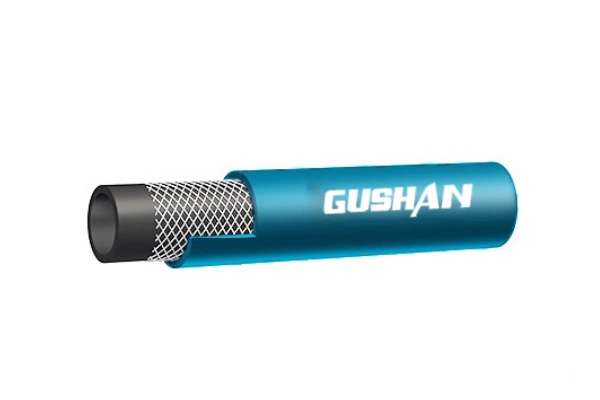
An oxygen hose is a type of flexible tubing designed to transport oxygen in various industrial, medical, and scientific applications. It is typically made from materials that are resistant to corrosion and can handle the high pressure of oxygen without degrading. Oxygen hoses are essential for ensuring a safe and efficient supply of oxygen to equipment, medical devices, or industrial systems.
These hoses are specially engineered to prevent any potential hazards that could arise from oxygen’s reactive nature, making them a crucial component in environments like hospitals, welding operations, or in aerospace. They often come with high-quality fittings and specific certifications to meet stringent safety standards, ensuring that oxygen is transported safely without leaks or contamination.
What is an Acetylene Hose?
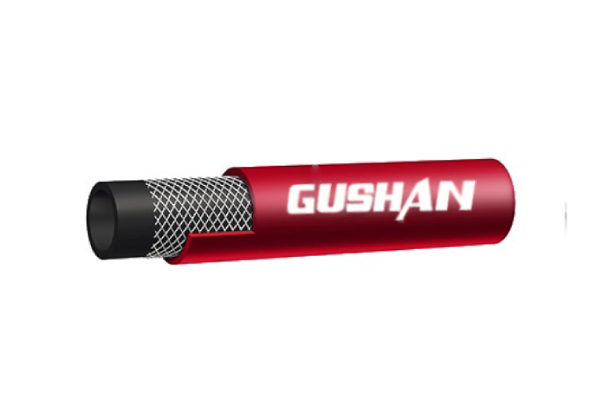
An acetylene hose is a specialized type of hose designed to carry acetylene gas, typically used in welding and cutting operations. These acetylene hoses are constructed from materials that can withstand the highly flammable nature of acetylene and are built to handle the high pressure associated with its use. They are often reinforced with braided materials, providing additional strength and durability to prevent rupture during high-pressure applications.
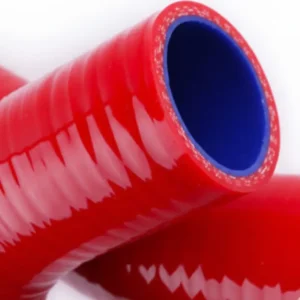
Acetylene hoses are usually color-coded, with the common practice being to use a red hose to differentiate it from other types of gas hoses. To ensure safety, acetylene hoses are made with materials that are resistant to heat and chemical degradation, as acetylene is prone to causing damage in less durable hoses. These hoses are often equipped with specialized fittings to securely connect to welding equipment, reducing the risk of leaks and ensuring the controlled flow of gas for precise operations.
Oxygen and Acetylene Hoses Color Coding
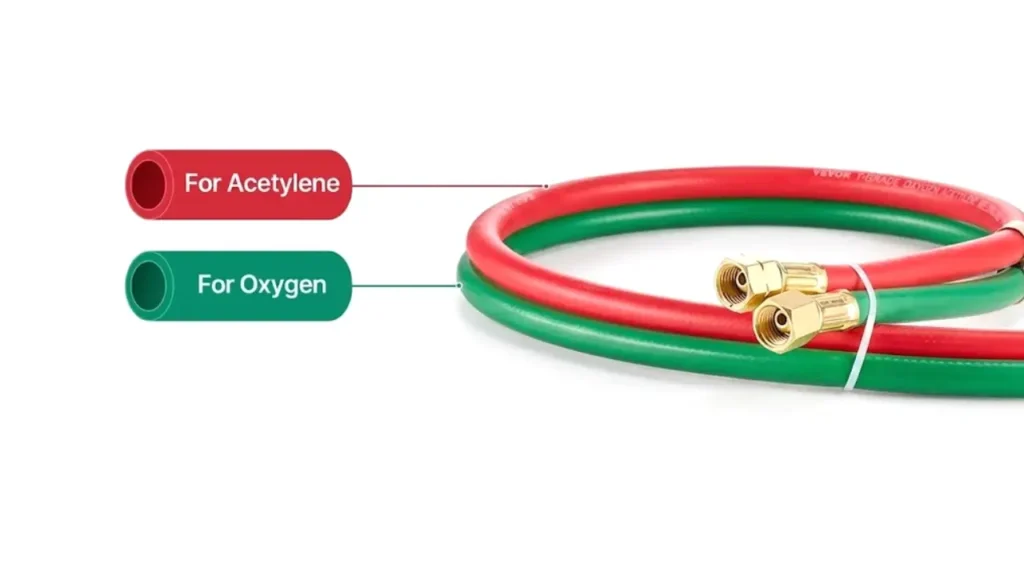
Oxygen and acetylene hoses are color-coded to distinguish them easily in industrial settings, preventing cross-connection and enhancing safety. The color coding helps workers quickly identify which hose is used for which gas, reducing the chances of dangerous mix-ups during high-pressure applications.
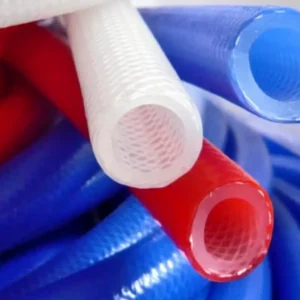
- Oxygen hoses: Typically blue, designed to safely carry oxygen, reinforced to withstand pressure and made with materials resistant to degradation caused by oxygen’s reactivity, ensuring reliable performance over time.
- Acetylene hoses: Usually red, built to handle the flammable nature of acetylene gas, engineered to endure high pressure and resist heat, offering safety during extreme conditions in welding and cutting operations.
Oxygen and Acetylene Hoses Pressure Ratings
Oxygen and acetylene hoses come with specific pressure ratings to ensure safe operation in various industrial and medical environments. These ratings are critical for determining the maximum pressure each hose can handle, reducing the risk of failure or rupture when used with high-pressure gas systems.
- Oxygen hoses: Pressure rating typically ranges from 200 to 300 psi, depending on hose construction. Oxygen hoses are designed to handle high pressures safely, made with durable materials to withstand the stress without compromising the integrity of the hose, ensuring stable gas flow.
- Acetylene hoses: Pressure rating usually ranges from 150 to 250 psi. Acetylene hoses are specifically designed to manage lower pressure compared to oxygen hoses due to acetylene’s unstable nature under higher pressure, ensuring the hose maintains safety while transporting flammable gas in high-risk applications.
Oxygen and Acetylene Hoses Material
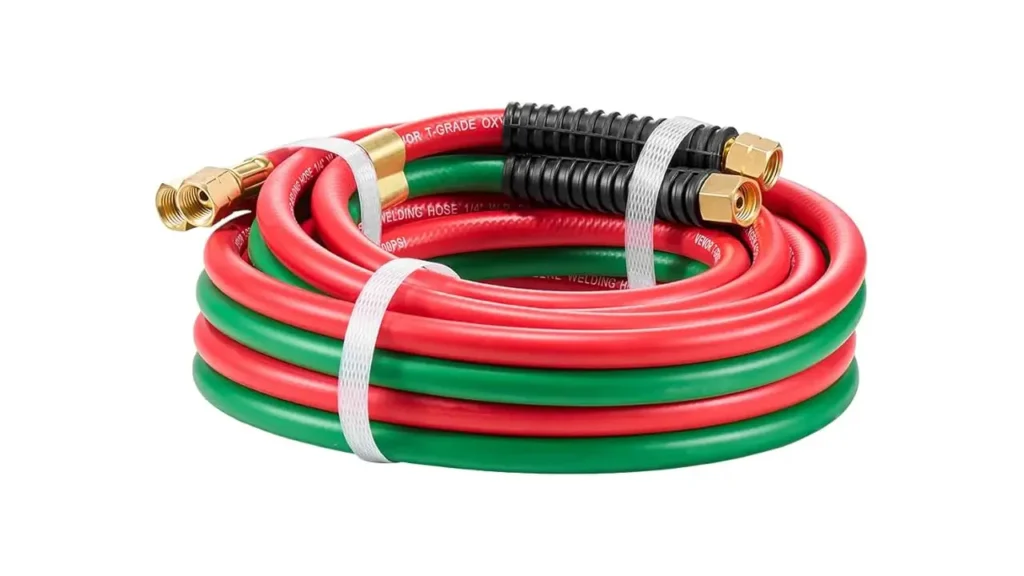
Oxygen and acetylene hoses are made from specific materials to ensure safety, durability, and resistance to the properties of the gases they carry. The choice of material is crucial for withstanding the pressure and chemical characteristics of oxygen and acetylene in demanding industrial environments.
- Oxygen hoses: Typically made from rubber or synthetic compounds, reinforced with braided or spiral layers to withstand high pressure and prevent degradation from the reactive nature of oxygen, ensuring durability and preventing cracking over long-term use.
- Acetylene hoses: Made from rubber, often with additional reinforcement, designed to resist heat and chemical attack from acetylene gas, typically braided with textile fibers to increase strength and prevent rupture, ensuring safe performance during welding or cutting.
Oxygen and Acetylene Hoses Applications
Oxygen and acetylene hoses are essential in various industries due to their ability to safely transport oxygen and acetylene gases. These hoses are used in high-risk applications, where precise control of gas flow is crucial for effective performance and safety in activities such as welding, medical applications, and industrial processes.
- Oxygen hoses: Commonly used in medical settings and welding, delivering oxygen to patients in hospitals and providing a controlled supply for cutting and welding, ensuring safe and continuous oxygen flow in these critical applications.
- Acetylene hoses: Widely used in welding and metal cutting, designed to handle the volatile gas for oxy-acetylene welding and cutting, ensuring safety and efficiency for high-temperature precision in manufacturing and repair work.
Why Choose Our Oxygen and Acetylene Hoses?
Choosing our oxygen and acetylene hoses ensures reliability, safety, and performance across various applications. Our hoses are designed to meet stringent safety standards, offering durability and peace of mind whether you’re working in industrial, medical, or welding environments.
- High-quality materials: Made from durable, pressure-resistant materials. Our hoses are crafted from top-grade rubber and synthetic compounds that resist cracking, heat, and chemical degradation, ensuring long-lasting performance even under extreme conditions like high pressure or constant exposure to gases.
- Safety features: Built with safety in mind. Each hose is reinforced and color-coded for easy identification, reducing the risk of cross-connection and gas leaks, and minimizing the chances of accidents in high-risk environments like welding or medical facilities.
Conclusion
Choosing the right hose for oxygen or acetylene is critical for ensuring safety and performance during welding operations. Oxygen hoses are typically green and designed to handle the high pressure of oxygen, while acetylene hoses are red and built to withstand the properties of acetylene gas. Understanding these differences can prevent accidents and ensure reliable operations.
For welding professionals, using the correct hoses for each gas type is not just a matter of efficiency but also of safety. Improper hose selection can lead to dangerous leaks, fires, or explosions, which can be easily avoided by choosing the right materials and hoses.
For wholesale oxygen hoses and acetylene hoses, our Gushan Rubber collection offers high-quality, durable options designed to meet the highest standards. Whether you need hoses for industrial or commercial welding applications, our products provide reliability and safety at competitive prices.