Hydraulic hoses are essential components in numerous industrial and mechanical applications. They are responsible for transferring high-pressure hydraulic fluid to various components, powering everything from construction equipment to manufacturing machinery. However, with a myriad of hoses available, accurate identification is crucial for ensuring optimal performance, safety, and longevity.
In this blog post, we’ll delve into the key factors to consider when identifying hydraulic hoses, enabling you to make informed decisions and safeguard your operations.
What Is Hydraulic Hose Identification?
Hydraulic hose identification is the process of determining the specific type and characteristics of a hydraulic hose. This information is crucial for ensuring the correct replacement or repair of hydraulic hoses, as well as for maintaining the overall safety and efficiency of hydraulic systems.
How to Identify Hydraulic Hose Size?
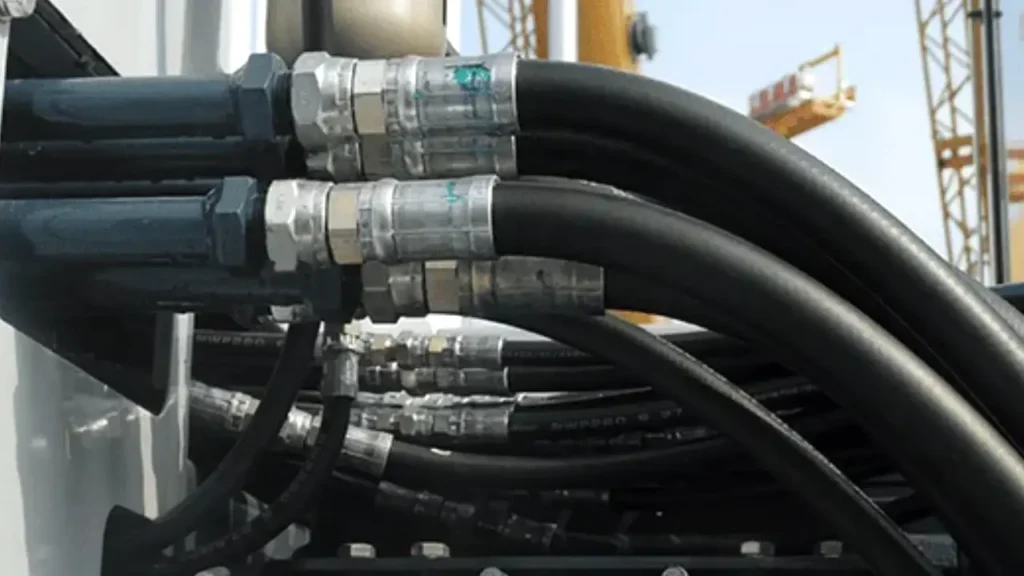
Identifying hydraulic hose size correctly is crucial for maintenance, replacement, and system efficiency. Misidentification can lead to poor performance, leaks, or safety risks. By examining markings, measuring dimensions, and confirming fitting specifications, you can accurately determine hose size. A clear step-by-step method ensures consistency, reduces downtime, and keeps hydraulic systems operating safely under various working conditions.
Step 1: Read Hose Markings
Tools Needed:
- Cleaning cloth
- Flashlight
- Magnifying glass
Start by locating and reading the hose markings printed along the outer cover. These markings typically include inner diameter, pressure rating, and standard codes. Clean the surface if needed to improve visibility. Manufacturer information often provides the quickest and most reliable way to identify hose size accurately.
Step 2: Measure Inner Diameter
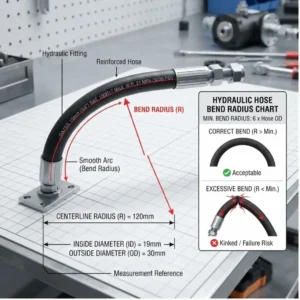
Use a caliper or measuring tool to determine the hose inner diameter if markings are unclear. This measurement is essential because it defines fluid flow capacity. Ensure accurate readings by measuring across the internal opening. Comparing results with standard sizing charts helps confirm the correct hose size.
Step 3: Check Outer Diameter
Measure the outer diameter to understand the hose’s wall thickness and reinforcement level. This helps verify compatibility with clamps, routing spaces, and protective sleeves. While outer diameter does not define size directly, it supports identification and ensures the hose fits properly within the system design.
Step 4: Identify Fitting Specifications
Inspect the fittings attached to the hose, noting thread size, type, and configuration. Use a thread gauge or reference guide to match specifications accurately. Proper fitting identification confirms compatibility with system ports and ensures leak-free connections, which is critical for safe and efficient hydraulic system operation.
Step 5: Compare With Standard Charts
Cross-check your measurements and observations with industry standard charts. These hydraulic hose size charts correlate inner diameter, outer diameter, and fitting sizes with recognized hose specifications. This final verification step helps eliminate errors, ensuring the identified hose size matches application requirements and performs reliably under working conditions.
S.T.A.M.P.E.D. Hydraulic Hose Identification

The S.T.A.M.P.E.D. method is a helpful acronym for identifying the key factors to consider when selecting a hydraulic hose. It helps ensure that you choose the right hose for your specific application, reducing the risk of failure and improving system performance.
Here’s what each letter in S.T.A.M.P.E.D. stands for:
- S: Size (Inner diameter, outer diameter, and length)
- T: Temperature (Operating temperature range)
- A: Application (Specific use case, e.g., industrial, mobile, etc.)
- M: Media/Material (Fluid type and compatibility with hose material)
- P: Pressure (Operating pressure rating)
- E: End Fittings (Type and size of fittings required)
- D: Delivery (Flow rate and volume requirements)
By carefully considering each of these factors, you can select a hydraulic hose that is well-suited for your needs.
Hydraulic Hose Identification Labels
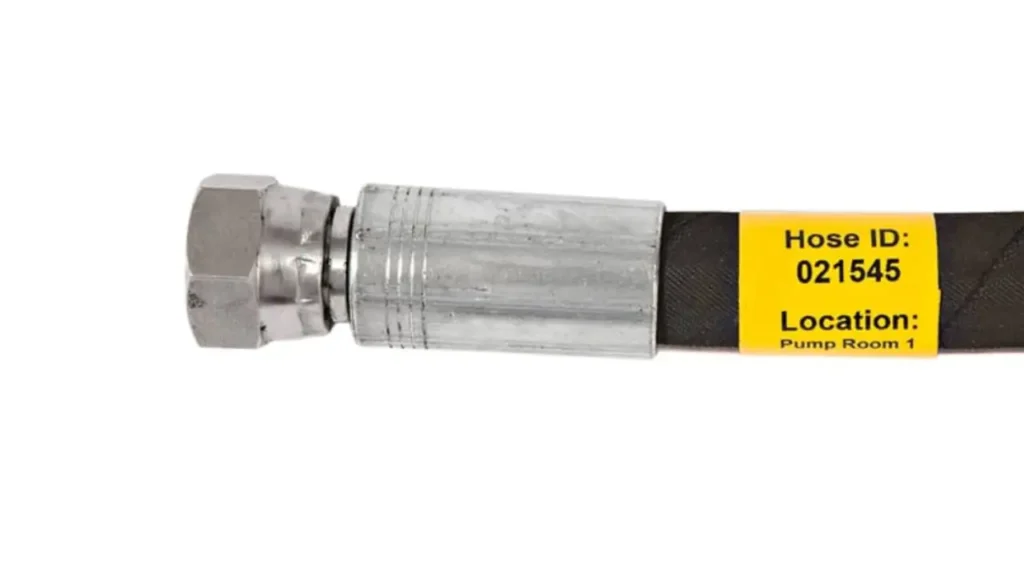
Hydraulic hose identification labels and tags are essential for ensuring the safe and efficient operation of hydraulic systems. These labels provide crucial information about the hose, such as its size, pressure rating, fluid compatibility, and hydraulic hose manufacturer.
Types of Hydraulic Hose Identification Labels:
There are several types of labels commonly used for hydraulic hose identification:
Printed Labels:
- Direct Printing: The information is printed directly onto the hose using ink or other printing methods.
- Self-Adhesive Labels: Labels are printed on adhesive-backed material and then applied to the hose.
Metal Tags:
- Stamped Tags: Metal tags with the necessary information stamped onto them.
- Engraved Tags: Metal tags with information engraved for durability.
Heat Shrink Tubing:
- Printed Tubing: Heat-shrink tubing with printed information that is shrunk onto the hose.
Key Information to Include on Labels (for the hydraulic hose labeling systems)
- Manufacturer’s Name: Identifies the manufacturer of the hose.
- Part Number: Unique identifier for the specific hose.
- Size: Inner diameter (ID) and outer diameter (OD) of the hose.
- Pressure Rating: Maximum pressure the hose can withstand.
- Temperature Range: Operating temperature limits.
- Fluid Compatibility: Types of fluids the hose can handle.
- Date of Installation: Records the date the hose was installed.
- Inspection Date: Schedule for regular inspections.
Factors to Consider When Choosing Hydraulic Hose Identification Labels:
- Durability: The label must withstand harsh environments, including exposure to hydraulic fluids, temperature extremes, and abrasion.
- Readability: The information on the label should be clear and easy to read.
- Adhesion: The label must adhere securely to the hose surface.
- Resistance to Chemicals: The label should be resistant to the chemicals used in hydraulic systems.
- Weather Resistance: The label should be able to withstand exposure to outdoor elements.
Proper Labeling Practices:
- Clear and Concise: Use clear and concise language on the labels.
- Consistent Placement: Place labels in a consistent location on the hose for easy identification.
- Regular Inspection: Regularly inspect labels for damage or fading.
- Update Labels: Update labels as needed, especially after repairs or replacements.
By using appropriate hydraulic hose identification labels and following best practices, you can improve safety, efficiency, and maintenance in your hydraulic systems.
Hydraulic Hose Identification Wrap
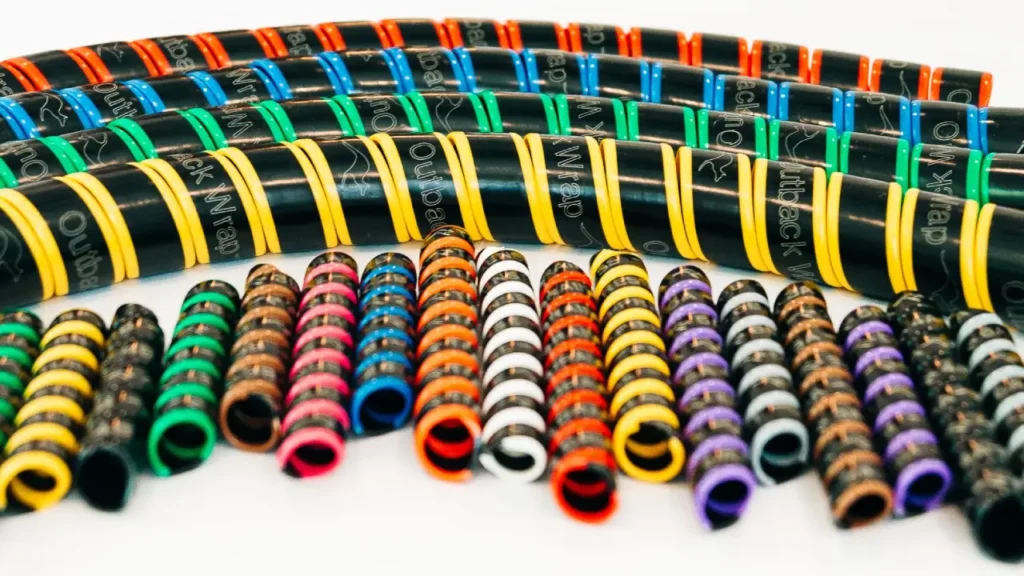
Hydraulic hose identification wraps are a popular solution for easily identifying hydraulic hoses and their corresponding connections. These wraps are typically made of durable materials like polyethylene and come in various colors and sizes to fit different hose diameters.
Key features and benefits of hydraulic hose identification wraps:
- Easy identification: Color-coded wraps and numbered markings make it easy to quickly identify the correct hose for each connection.
- Durability: Made from weather-resistant materials that can withstand harsh conditions and exposure to hydraulic fluids.
- Quick installation: No tools required for installation, simply wrap the hose and secure it in place.
- Long-lasting: The color is part of the molding process, so it won’t fade or crack over time.
- Versatile: Can be used on a variety of hydraulic hoses and equipment.
Popular brands and models:
- Outback Wrap: Offers a wide range of wraps in various colors and sizes, including specific kits for different equipment types.
- Other brands: Several other brands offer similar products with varying features and pricing.
How to choose the right identification wrap:
- Determine the hose size: Measure the diameter of your hoses to ensure the wrap fits securely.
- Consider the number of hoses: Choose a wrap kit that includes the appropriate number of wraps for your setup.
- Select the desired colors: Choose colors that are easy to distinguish and match your equipment’s color scheme.
- Check for additional features: Some wraps may include additional features like reflective strips or UV-resistant materials.
Proper installation and maintenance:
- Clean the hose: Ensure the hose is clean and dry before applying the wrap.
- Wrap securely: Wrap the hose tightly, but avoid over-tightening.
- Inspect regularly: Check the wraps periodically for damage or wear and replace them as needed.
By using hydraulic hose identification wraps, you can significantly improve the efficiency and safety of your hydraulic systems.
Conclusion
Elevate your hydraulic systems with wholesale hydraulic hoses from Gushan Rubber. Our extensive range of hydraulic hoses is designed to meet the rigorous demands of diverse industries.
Accurately identifying hydraulic hoses is crucial for ensuring optimal performance, safety, and longevity in various industrial and mechanical applications. By understanding the key components, markings, and factors to consider, you can confidently select the right hose for your specific needs.
Benefits of Choosing Us:
- Unmatched Quality: Our hoses are manufactured to the highest standards, ensuring durability and reliability.
- Diverse Selection: We offer a wide variety of hoses to suit different applications and pressures.
- Expert Guidance: Our knowledgeable team is ready to assist you in selecting the perfect hose for your needs.
- Competitive Pricing: Enjoy cost-effective solutions without compromising quality.
Don’t compromise on performance. Contact us today to explore our wholesale hydraulic hose options.