Hydraulic hoses are the unsung heroes of many industries, powering a wide range of machinery and equipment. From construction sites to manufacturing plants, these flexible tubes play a crucial role in transmitting high-pressure hydraulic fluid, enabling efficient and powerful operations.
In this blog post, we’ll delve into the diverse applications of hydraulic hoses, exploring how they contribute to the smooth functioning of various industries.
What Are Hydraulic Hoses?
Recommended Hydraulic Hoses
-
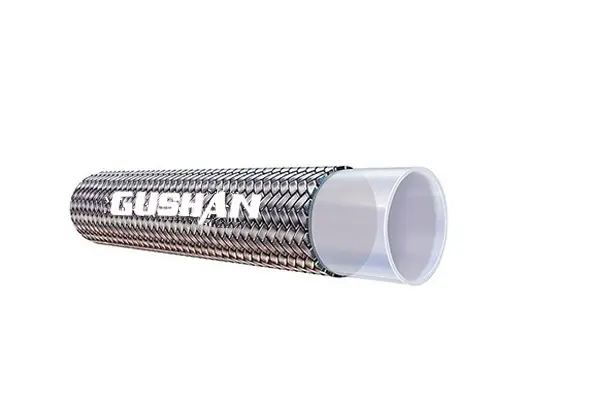
SAE 100 R14
-
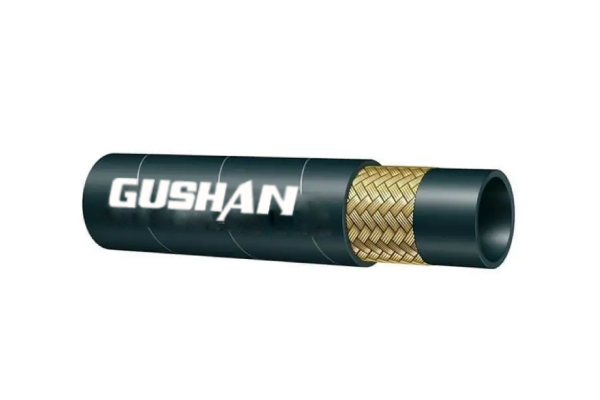
SAE 100R 1A / DIN EN853 1ST
-
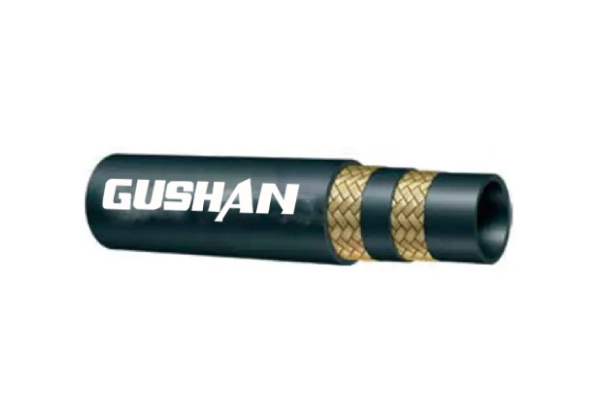
SAE 100R 2A / DIN EN853 2ST
-
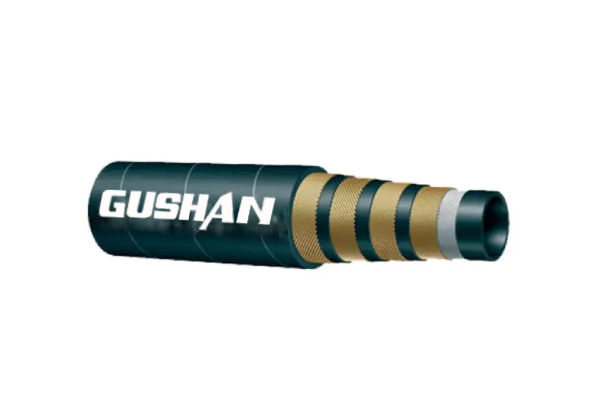
SAE 100R12
-
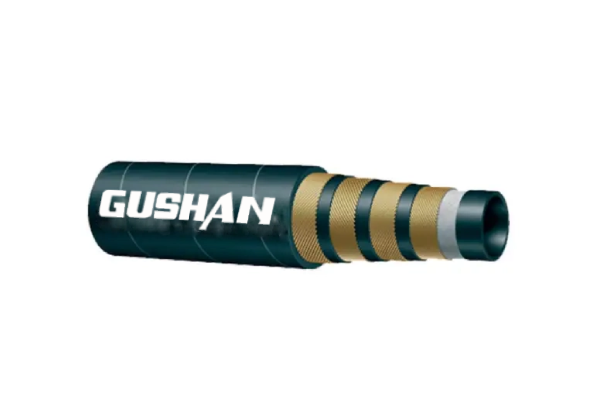
SAE 100R13
-
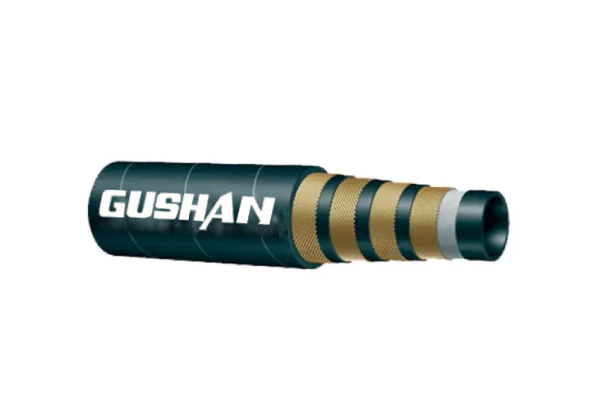
SAE 100R15
-
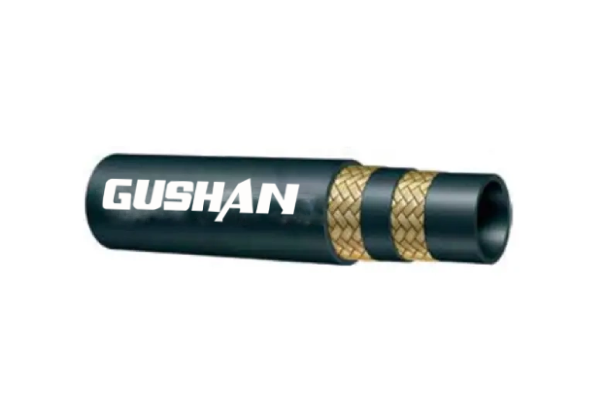
SAE 100R16
-
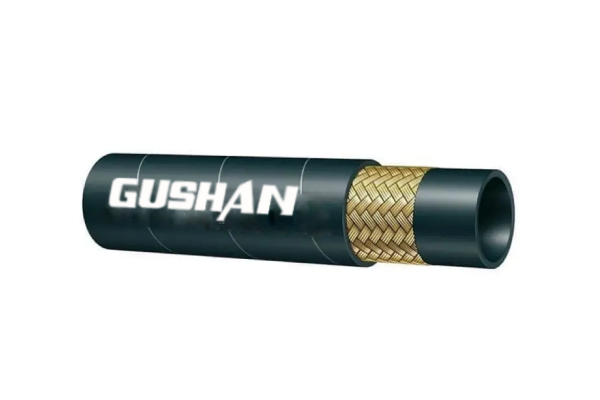
SAE 100R17
-
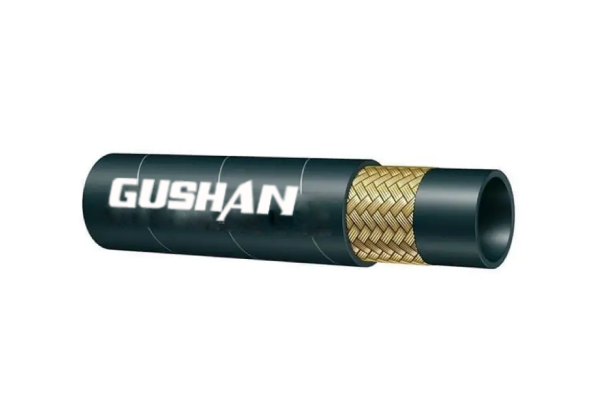
SAE 100R1AT/ DIN EN853 1SN
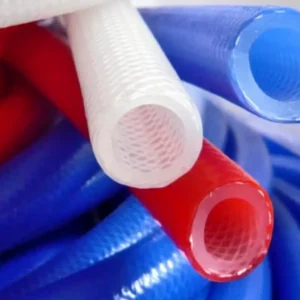
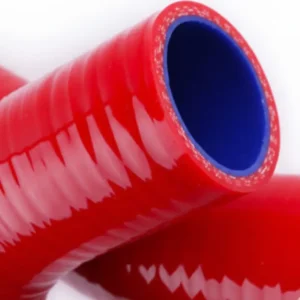
Hydraulic hoses are flexible tubes designed to transport hydraulic fluid between components in a hydraulic system. They handle high pressure, heat, and mechanical stress, allowing machines to operate smoothly. Choosing the right hose ensures efficiency, safety, and long-lasting performance in industrial and mobile equipment.
- High-Pressure Transmission – Hydraulic hoses are engineered to withstand extreme pressures, enabling the efficient transfer of fluid to actuators, valves, and pumps. Their reinforced layers prevent bursts, ensuring the system operates safely and reliably under demanding conditions.
- Flexibility and Movement – Unlike rigid pipes, hydraulic hoses can bend and flex, accommodating dynamic movement between components. This flexibility reduces stress on connections and allows equipment to function in tight spaces without compromising fluid flow.
- Durability and Material Strength – Constructed with synthetic rubber, thermoplastics, or reinforced layers, hydraulic hoses resist abrasion, heat, and chemical exposure. Their robust design ensures long service life, even under harsh industrial or mobile working environments.
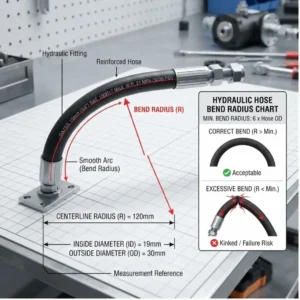
- Variety of Sizes and Types – Hydraulic hoses come in multiple diameters, lengths, and reinforcement types, including braided and spiral. Selecting the correct type ensures compatibility with system requirements, optimal pressure handling, and safe operation.
- Safety and Maintenance – Regular inspection and proper installation of hydraulic hoses prevent leaks, ruptures, and system failure. Using high-quality hoses and ferrules reduces downtime and enhances workplace safety while maintaining efficient hydraulic system performance.
What Are Hydraulic Hoses Used For?
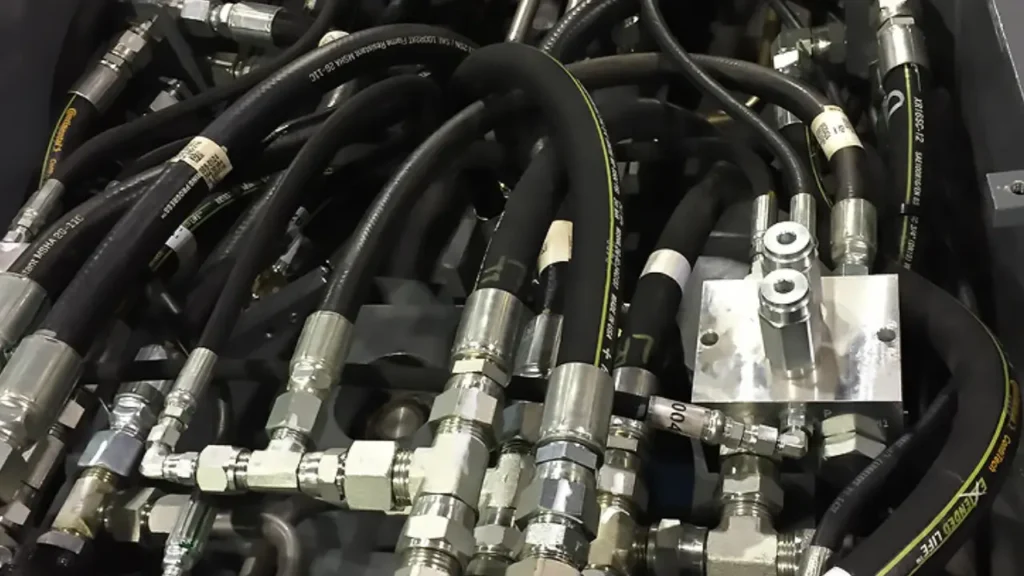
Hydraulic hoses are essential components in a wide range of industries, powering a variety of machinery and equipment. They are flexible tubes designed to transmit high-pressure hydraulic fluid between components in a hydraulic system.
Here you can find hydraulic hose applications in a vast array of industries:
Construction and Mining
- Excavator: Hydraulic hoses control the intricate movements of the arm, bucket, and other components, allowing for precise digging and material handling.
- Bulldozer: Hoses power the blade and ripper, enabling efficient earthmoving and grading operations.
- Crane: Hydraulic hoses operate the hoisting and slewing mechanisms, facilitating the lifting and positioning of heavy loads.
- Forklift: Hoses control the lifting and tilting of the forks, enabling efficient material handling in warehouses and construction sites.
- Mining Equipment: Hydraulic hoses power a variety of mining machinery, including drill rigs, rock breakers, and conveyor systems, optimizing extraction and transportation processes.
Agriculture
- Tractor: Hydraulic hoses power the lift arms, steering systems, and various implements, enhancing productivity and versatility.
- Harvester: Hoses control the cutting, threshing, and conveying mechanisms, streamlining the harvesting process.
- Combine Harvester: Hoses power the cutting, threshing, and conveying systems, maximizing efficiency in crop harvesting.
Industrial Manufacturing
- Machine Tools: Hydraulic hoses power the movement of machine tools, such as lathes, milling machines, and drilling machines, ensuring precise and efficient machining operations.
- Presses: Hoses provide the hydraulic power to operate presses for forming and shaping metal and plastic components.
- Injection Molding Machines: Hoses control the injection and clamping mechanisms, enabling the production of intricate plastic parts.
- Material Handling Equipment: Hoses power various material handling equipment, such as conveyors, lifts, and robotic arms, optimizing material flow and logistics.
Automotive
- Power Steering: Hydraulic hoses transmit fluid to the power steering pump and steering gear, providing effortless steering control.
- Brake Systems: Hoses transfer hydraulic pressure to the brake calipers, enabling reliable and efficient braking.
- Suspension Systems: Hoses power shock absorbers and other suspension components, ensuring optimal vehicle handling and ride comfort.
Aerospace
- Aircraft Landing Gear: Hydraulic hoses control the extension and retraction of landing gear, ensuring safe and reliable aircraft operations.
- Flight Control Systems: Hoses power actuators for controlling flight surfaces, such as ailerons, elevators, and rudders, enabling precise flight control.
Marine
- Ship Steering Systems: Hydraulic hoses power the steering gear, enabling ships to maneuver efficiently.
- Winches: Hoses operate the winching mechanism, used for various tasks, such as anchoring, mooring, and cargo handling.
- Cranes: Hoses control the lifting and lowering of loads, facilitating cargo handling and construction operations.
Material Handling
- Forklifts: Hydraulic hoses power the lifting and tilting of the forks, enabling efficient material handling in warehouses and construction sites.
- Conveyor Systems: Hoses control the movement of materials along conveyor belts, optimizing material flow and logistics.
By understanding the specific applications of hydraulic hoses in these industries, we can appreciate their crucial role in powering modern machinery and equipment.
Can Hydraulic Hose Be Used for Diesel Fuel?
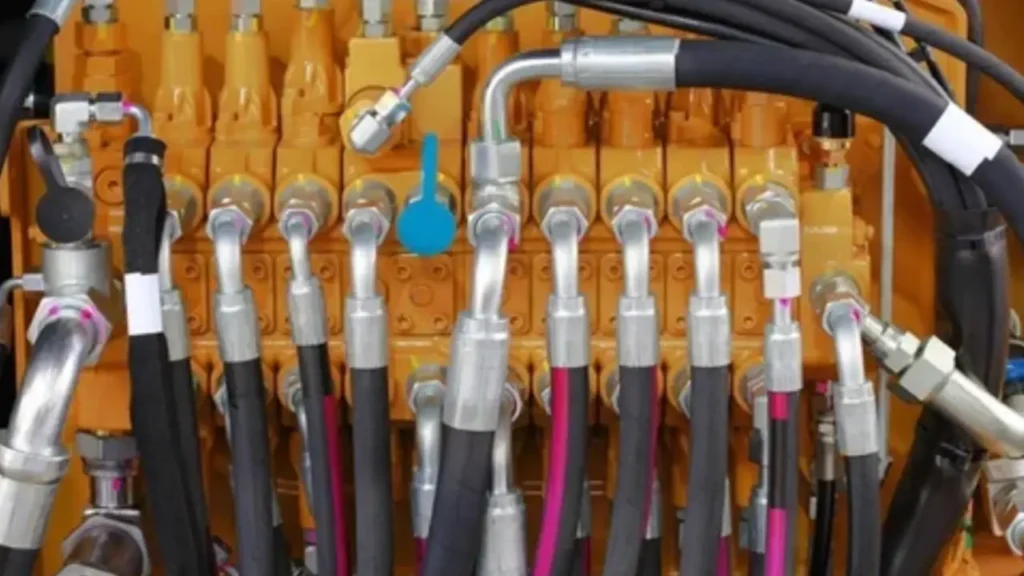
No, a standard hydraulic hose is not suitable for diesel fuel.
While some hydraulic hoses are specifically designed and rated for use with diesel fuel, standard hydraulic hoses are not. They are primarily designed to handle high-pressure hydraulic fluids, such as hydraulic oil.
Using a standard hydraulic hose for diesel fuel can lead to several issues:
- Material Compatibility: Standard hydraulic hoses may not be compatible with the chemical properties of diesel fuel, leading to degradation and potential leaks.
- Pressure Rating: Diesel fuel lines may require different pressure ratings than hydraulic hoses.
- Fire Hazard: Diesel fuel is flammable, and using an incorrect hose could increase the risk of fire.
To ensure safety and reliability, it’s crucial to use a fuel-resistant hose specifically designed for diesel fuel applications. These hoses are made from materials that are compatible with diesel fuel and can withstand the required pressure and temperature conditions.
If you have any doubts or questions about the suitability of a particular hose for your application, it’s always best to consult with a hydraulics or fuel system expert.
Can a Hydraulic Hose Be Used for Gasoline?
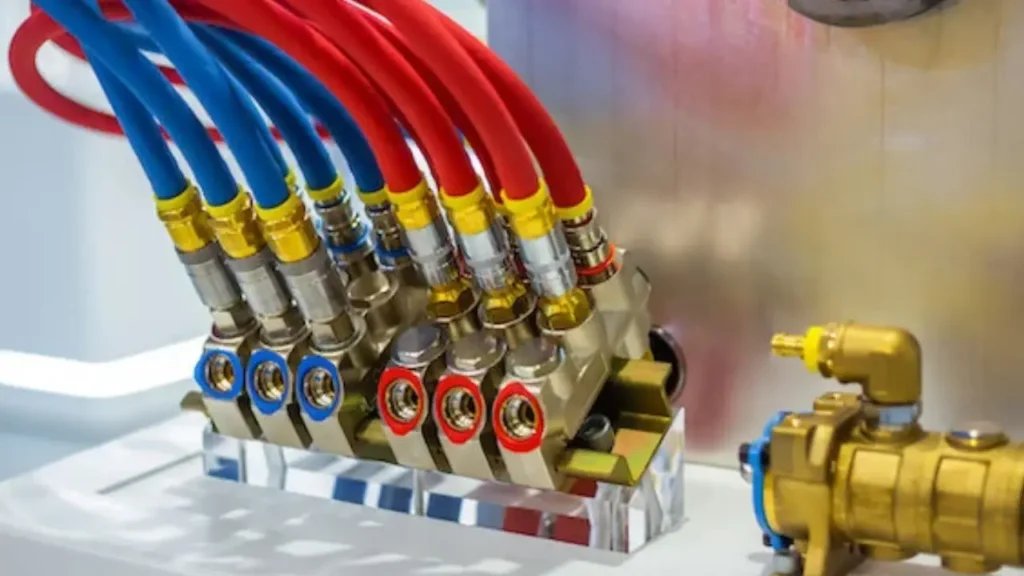
Hydraulic hoses are typically designed for fluid power applications, but using them for gasoline requires careful consideration. Gasoline is a volatile substance, and not all hydraulic hoses are compatible with it. Here are some factors to consider:
- Material Compatibility: Ensure the hose material can withstand gasoline’s corrosive effects, preventing degradation.
- Pressure Resistance: Check if the hose can handle the pressure of the gasoline system without compromising safety.
- Temperature Range: Gasoline can fluctuate in temperature, so ensure the hose remains stable under varying conditions.
- Regulatory Compliance: Ensure the hose meets industry regulations for safety and fluid compatibility.
Can a Hydraulic Hose Be Used for Propane?
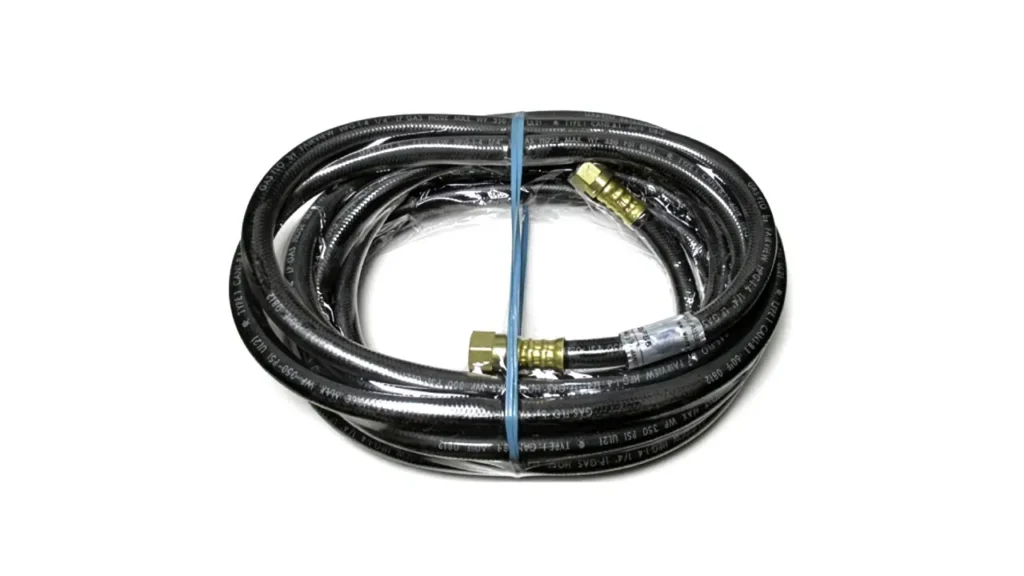
Hydraulic hoses are not typically designed for propane, as propane is a flammable gas and requires hoses with specific resistance properties. Using a hydraulic hose for propane can pose significant safety risks. Here are key factors to consider:
- Material Compatibility: Not all hydraulic hoses are made from materials resistant to propane, potentially causing deterioration or leaks. Using hoses designed for gas is essential.
- Pressure Resistance: Propane systems often operate under higher pressures. Hydraulic hoses may not be rated to handle the specific pressure levels required for safe propane transportation.
- Flammability: Propane is highly flammable, and hydraulic hoses are not always designed to be fire-resistant. Special hoses with proper flame-retardant features should be used.
- Regulatory Standards: Ensure the hose complies with propane industry standards, which are stricter than those for hydraulic fluid, to avoid safety hazards.
Can You Use a Hydraulic Hose for Air Compressor?
Hydraulic hoses can be used for air compressors, but only under specific conditions. While they are designed for high-pressure systems, they are not always the best choice for compressed air systems, as they may lack some features needed for optimal air flow and safety.
One key factor to consider is the pressure rating. Hydraulic hoses are built to handle very high pressures, often higher than air compressors typically generate. However, the material and structure of the hose may not be suited for the characteristics of compressed air, such as its tendency to expand and contract under varying temperatures.
Hydraulic hoses may not provide the same level of flexibility required for air compressor systems, especially in dynamic or mobile applications. Using hoses specifically designed for air, such as air compressor hoses, ensures better durability, performance, and safety. It’s always best to check the hose specifications and consult manufacturer guidelines before using a hydraulic hose for compressed air.
Conclusion
Hydraulic hoses are indispensable components in a myriad of industries, powering everything from construction equipment to aerospace systems. By understanding their crucial role and the factors influencing their selection, you can optimize your hydraulic systems for efficiency and reliability.
Ready to elevate your operations with premium hydraulic hoses?
Gushan Rubber offers a comprehensive range of hydraulic hoses, tailored to meet the diverse needs of various industries. Our commitment to quality, innovation, and customer satisfaction ensures that you receive the best possible solution.
Contact us today to explore our extensive product range and expert services. Don’t compromise on quality. Choose Gushan Rubber.