
Non Conductive Hydraulic Hose
We provide non-conductive hydraulic hoses specifically designed to prevent the flow of electrical current. This is crucial in environments where electrical hazards exist, such as those involving high voltage equipment or flammable liquids. 1 These hoses are constructed with specialized materials that minimize the risk of electrical shock and fire.
Get Your Desired Non Conductive Hydraulic Hose
Finding the perfect non-conductive hydraulic hose can be challenging. We understand your specific needs. Let us help you find the ideal solution. Our team of experts can guide you through the selection process, considering factors like pressure, temperature, and chemical compatibility. Get in touch with us today and let’s find the non-conductive hose that perfectly suits your application.
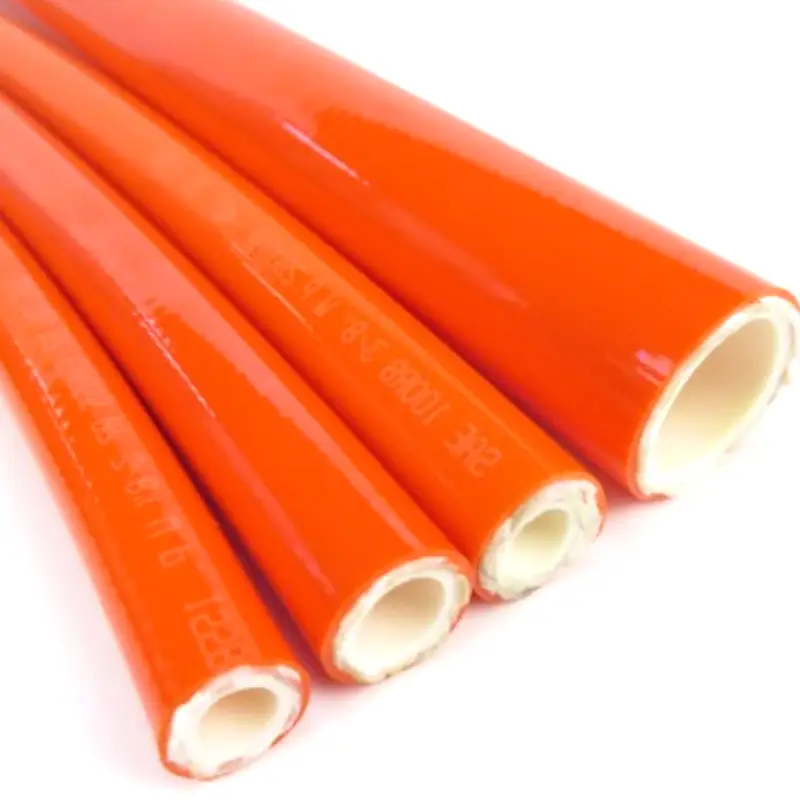
1/4 hydraulic non conductive hose
- Inner Tube: Typically made from synthetic rubber or thermoplastic elastomers (TPEs), designed to be chemically resistant to the fluid being conveyed.
- Reinforcement: Often consists of multiple layers of braided synthetic fibers (like nylon or polyester) or spiraled wire for strength and pressure resistance.
- Cover: The outer layer, usually made from abrasion-resistant materials like polyurethane or PVC, provides protection against environmental factors like weather, chemicals, and mechanical damage.
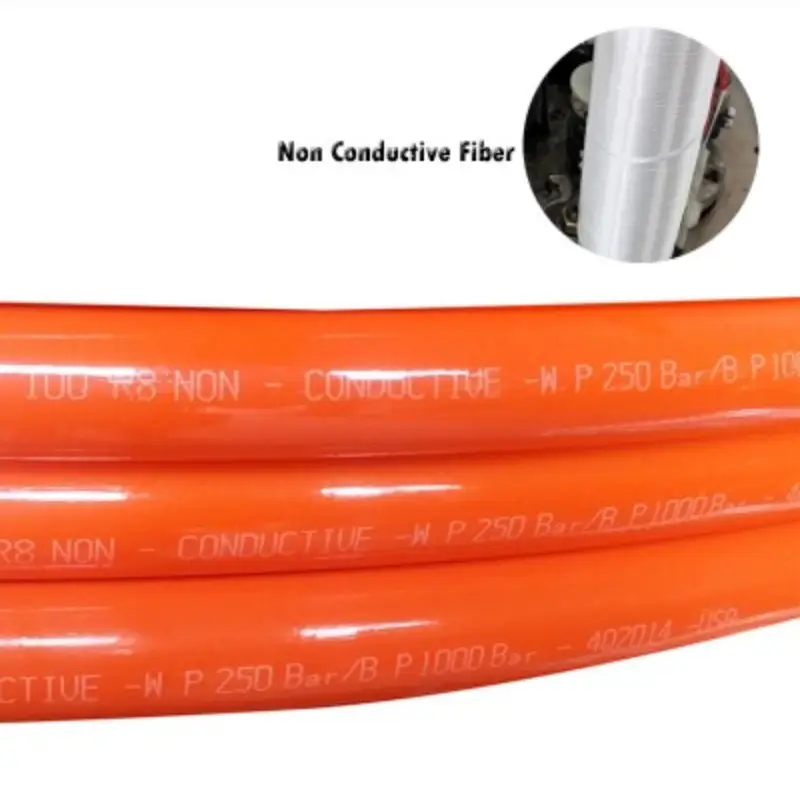
Non-conductive hoses lack metal reinforcements, which are the primary source of electrical conductivity in standard hydraulic hoses.
This structure ensures that the non conductive hydraulic hose itself does not conduct electricity, minimizing the risk of electrical shock and fire in hazardous environments.
Non Conductive Hose Benefits
Mitigate Electrical Shock Risk We provide non-conductive hoses engineered to act as an electrical insulator, significantly minimizing the chance of an operator being exposed to high-voltage shock. This protective feature is essential for utility work or rescue applications near active power lines.
Prevent Arcing and Ignition Hazards We offer hoses constructed without conductive materials, which eliminates the risk of sparks or electrical arcing. This is crucial for environments with flammable gases, vapors, or dust, helping to prevent catastrophic fires or explosions on site.
Protect Sensitive Electronic Equipment We supply non-conductive hose assemblies that shield delicate modern machinery and electronic components from stray electrical currents. This prevents potential damage, malfunctions, and costly repairs, ensuring your system maintains continuous, reliable operation.
Non Conductive Hose Uses
Aerial Lift and Bucket Trucks We provide hydraulic hoses specifically for utility vehicle booms that allow workers to safely operate near high-voltage power lines. This insulating layer is crucial to prevent electrical currents from traveling through the hydraulic fluid and hose assembly to the operator’s basket.
High-Pressure Rescue Tools We offer hoses for emergency hydraulic equipment, such as the “Jaws of Life,” where extrication may occur near damaged electrical systems. The non-conductive property shields rescue personnel from potential electrical hazards during time-critical operations.
Mining and Tunneling Equipment We supply pneumatic and water hoses used in underground areas to ensure electrical isolation between tools and the power source. This prevents stray currents from charging metal equipment, protecting miners in environments where grounding can be unreliable.
Why Choose Our Non Conductive Hydraulic Hose
Enhanced Safety
Our non conductive hydraulic hoses are engineered to prevent the flow of electrical current, significantly reducing the risk of electrical shocks and fires. This is paramount in hazardous environments where high voltages or flammable liquids are present, ensuring the safety of personnel and equipment.
Wide Range of Applications
We offer a diverse selection of non-conductive hoses to suit various industrial and commercial applications. From heavy-duty construction equipment to sensitive aerospace systems, we have the right hose for your specific needs and operating conditions.
Superior Reliability
Constructed with materials and robust manufacturing processes, our non conductive hydraulic hoses offer exceptional durability and resistance to abrasion, chemicals, and extreme temperatures. This translates to minimal downtime and reduced maintenance costs over the long term.
Environmental Responsibility
Many of our non-conductive hoses are manufactured with environmentally friendly materials and adhere to strict environmental regulations. This commitment to sustainability helps minimize the environmental impact of your operations.
what is Non Conductive Hydraulic Hose?
A non-conductive hydraulic hose is specifically designed to prevent the flow of electrical current. Unlike standard hydraulic hoses, which often contain metal components like wire reinforcements, non-conductive hoses are constructed using materials that minimize electrical conductivity.
This feature is crucial in environments where electrical hazards exist, such as those involving high voltage equipment, flammable liquids, or explosive atmospheres. By preventing the flow of electricity, non-conductive hoses significantly reduce the risk of electrical shock and potential fires, enhancing safety in hazardous working conditions.
What is the difference between conductive and non-conductive hose?
The primary difference between conductive and non-conductive hoses lies in their ability to transmit electrical current.
Conductive hoses are designed to allow the flow of electricity. They typically incorporate metal components within their construction, such as wire braids or spiral wraps. This makes them suitable for applications where grounding is necessary, such as in environments with flammable liquids or high voltage equipment. By grounding the hose, static electricity can be safely dissipated, reducing the risk of sparks and explosions.
Non-conductive hoses, on the other hand, are specifically engineered to prevent the passage of electrical current. They are constructed using non-metallic materials in their reinforcement layers, such as synthetic fibers like nylon or polyester. This makes them ideal for use in environments where electrical hazards are present, minimizing the risk of electrical shock and fire.
In essence, the choice between a conductive and non-conductive hose depends on the specific application and the associated safety requirements.
What Hydraulic Fluid is Non-Conductive?
Non-conductive hydraulic fluids are specifically designed to minimize the risk of electrical current flow within a hydraulic system. These fluids are formulated with additives and base oils that possess high dielectric strength.
Dielectric strength is a measure of a fluid’s resistance to electrical breakdown. In essence, it indicates how much voltage a fluid can withstand before it becomes conductive. High dielectric strength fluids act as effective electrical insulators, preventing the flow of current even in the presence of high voltages.
This property is crucial in applications where there’s a potential for electrical hazards, such as systems operating near high-voltage equipment or in environments with flammable materials.
Key Characteristics of Non-Conductive Hydraulic Fluids:
- High Dielectric Strength: The primary characteristic, ensuring minimal electrical conductivity.
- Excellent Lubrication Properties: Must still provide adequate lubrication and wear protection for the hydraulic system components.
- Compatibility: Compatible with various system materials, including seals and hoses.
- Thermal Stability: Maintain their properties over a wide range of operating temperatures.
Examples of Non-Conductive Hydraulic Fluids:
- Synthetic Ester Fluids: Often preferred due to their excellent dielectric properties and resistance to oxidation.
- Specialty Fluids: Formulated with specific additives to enhance dielectric strength and other performance characteristics.
It’s important to consult with fluid manufacturers and hydraulic system experts to select the most appropriate non-conductive fluid for a specific application.
What makes a hose non-conductive?
We manufacture non-conductive hoses by intentionally selecting materials with extremely high electrical resistance to prevent current flow . This specialized construction eliminates the risk of electrical shock for personnel and protects equipment in high-voltage environments, such as those involving aerial lift trucks or rescue tools. Our design excludes any metallic or carbon-filled components that would create a path for electricity.
Non-Conductive Hose Construction
Insulating Outer Cover Material: We offer an outer cover typically made from thermoplastics like polyurethane or PVC, which are naturally non-conductors of electricity. These materials ensure that any contact with external electrical sources cannot create a circuit through the hose to the operator or machinery, providing essential protection in high-risk areas.
Absence of Metallic Reinforcement: We strictly avoid using steel wire braids or helices in the hose body, as these would create an efficient conductor for electrical current. Instead, we use high-tensile synthetic fibers like polyester or polyaramid to provide the necessary pressure reinforcement and structural integrity without compromising electrical safety standards.
High-Resistivity Inner Tube Compound: We provide an inner tube crafted from materials such as nylon or polyester elastomer, which have inherently high electrical resistivity. This critical inner layer works to block any electrical charge trying to travel through the conveyed fluid or along the hose’s internal structure, maintaining insulation.
Compliance with Safety Standards (SAE J517): We manufacture products engineered to meet stringent requirements, such as SAE 100R7 or 100R8 specifications for non-conductivity. This includes tests where the hose must exhibit extremely low leakage current (less than 50 micro-amperes) when subjected to high voltages (75,000 volts/foot), certifying its protective capability.
What hydraulic fluid is non-conductive?
The primary type of fluid we provide that is non-conductive is often referred to as dielectric hydraulic fluid . We manufacture this specialized oil using highly refined base stocks and an additive package that resists electrical conductivity. This formulation is essential for safety, particularly in mobile equipment like aerial lifts and bucket trucks that operate close to high-voltage power lines, ensuring operator protection.
Non-Conductive Hydraulic Fluid Characteristics
High Dielectric Strength We supply fluids with a high dielectric strength, which is the maximum voltage a fluid can withstand before its insulating properties break down. This value is typically specified at 35 kV or higher, according to standards like ASTM D877, ensuring the fluid acts as a reliable electrical insulator during operation.
Purity of Base Oils We offer formulations based on pure base oils, such as certain mineral oils or synthetic hydrocarbons, that inherently resist electrical flow. The high refining process removes impurities and polar compounds that would otherwise increase electrical conductivity, maintaining the fluid’s critical insulating capability.
Specialized Additive Chemistry We manufacture fluids utilizing carefully selected, non-conductive additive packages that enhance performance without compromising safety. Anti-wear and corrosion control agents are included, but we strictly avoid components like zinc or ash-forming compounds that can reduce the fluid’s vital dielectric strength over time.
Sensitivity to Contamination We provide guidance that emphasizes maintaining fluid cleanliness because the non-conductive property is highly sensitive to contaminants. Even small amounts of water, dirt, or metal particles can significantly reduce the dielectric strength, transforming the fluid from an insulator to a path for electrical current.
Ideal for Utility Equipment We supply this specialized fluid primarily for use in hydraulic systems on aerial lifts, cherry pickers, and boom trucks operating near electrical utilities. Using non-conductive fluid is a critical safety measure that complements non-conductive hoses and insulating barriers to protect personnel from electrocution.
