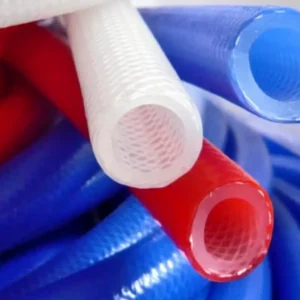
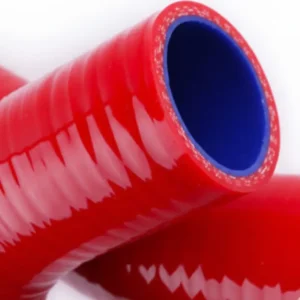
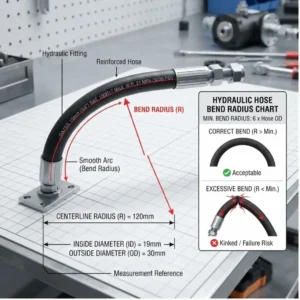
Rubber hoses can become stiff and difficult to handle after long-term use, storage, or exposure to heat, sunlight, and chemicals. Learning how to soften rubber hose can improve flexibility and make installation easier. In this guide, we will explain practical methods to soften stiff rubber hoses and discuss important safety considerations.
Whether you are working with hydraulic hoses, industrial hoses, or other rubber tubing, choosing the right softening method matters. Some techniques may temporarily improve flexibility, while others can damage the rubber or reduce its performance. We will cover effective approaches, suitable conditions, and tips to help you handle rubber hoses properly.
Why Need to Soften Rubber Hoses?
Rubber hoses can become stiff because of aging, temperature changes, pressure, UV exposure, or long-term storage. A hardened hose is more difficult to install, bend, and connect properly. Softening the hose can restore some flexibility and make it easier to handle while helping reduce unnecessary stress during installation and regular use.
- Improve Flexibility: Softening a stiff rubber hose makes it easier to bend and position around equipment. Better flexibility can help the hose follow curved installation paths without excessive force, making connections easier and reducing the risk of kinks caused by forcing a hardened hose into place.
- Make Installation Easier: Flexible hoses are generally easier to fit over fittings, connectors, and other components. Softening the rubber can reduce the effort needed during installation, especially when working with tight spaces or hoses that have become harder after extended storage or repeated exposure to demanding conditions.
- Reduce Bending Stress: A hardened hose may resist bending and create additional stress around connection points. Improving its flexibility allows the hose to bend more naturally, which can help prevent sharp bends, excessive tension, and deformation during installation and everyday operation.
- Extend Usable Life: Rubber naturally loses flexibility as it ages and is exposed to heat, sunlight, chemicals, and other environmental factors. Appropriate softening methods may restore some flexibility temporarily, helping an otherwise usable hose remain practical for certain applications when its structure is still in good condition.
- Improve Sealing: A flexible rubber hose can conform more easily around compatible fittings and connection surfaces. This can make installation smoother and help create a more consistent connection. However, softening cannot repair cracks, severe hardening, swelling, or other damage that has already compromised the hose.
- Prevent Installation Damage: Forcing a stiff hose into position can cause excessive stretching, twisting, or surface damage. Softening the hose before installation can make handling easier and reduce unnecessary mechanical stress, particularly when the hose needs to be routed through narrow spaces or around multiple bends.
How to Soften a Rubber Hose?
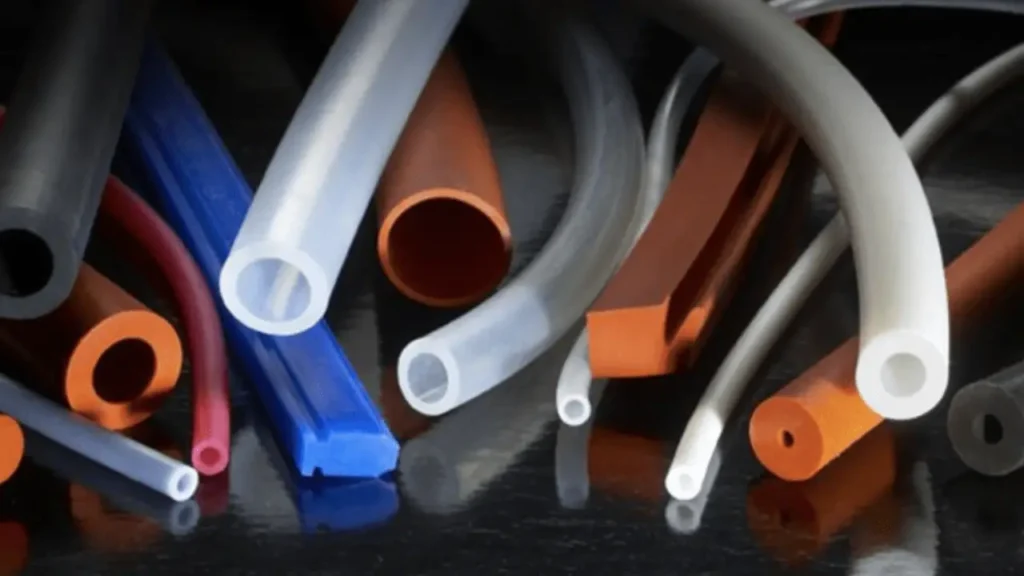
Softening a stiff rubber hose involves safely applying heat or using specific compounds to restore its natural elasticity. These methods are crucial for easing installation onto fittings, preventing cracks, and ensuring the hose remains flexible for a smooth, reliable fluid path.
Step 1: Use the Hot Water Immersion Method
Fill a container large enough for the stiff end of the hose with very hot, but not boiling, water. Submerge the end of the hose for approximately five to ten minutes, ensuring the water level covers the section needing to be softened for the fitting.
The heat from the water permeates the rubber, temporarily making the material pliable and slightly expanding the inner diameter. Once the hose is flexible, quickly remove it and immediately push it onto the fitting before it cools and stiffens again.
Step 2: Apply a Heat Gun or Hair Dryer
For hoses that cannot be fully immersed, use a heat gun on a low setting or a high-power hair dryer. Move the heat source constantly around the entire circumference of the hose end to ensure even heating and prevent scorching or melting the rubber.
Concentrate the heat just enough until the hose feels noticeably warmer and more yielding to the touch. This method offers precise control, making it ideal for targeted softening on specific hose sections or complex, installed assemblies.
Step 3: Utilize a Steam Method
For a rapid and even softening, hold the stiff hose end carefully over the spout of a boiling kettle or a garment steamer. The moist, intense heat penetrates the rubber quickly, making the material highly flexible in less than two minutes.
Use caution to avoid steam burns and secure the hose firmly. The high heat from the steam makes the hose temporarily very soft, allowing it to be easily manipulated and slid over a tight fitting with minimal effort.
Step 4: Apply Rubber Conditioner or Lubricant
Choose a rubber-safe lubricant, such as silicone spray, glycerin, or specialized rubber conditioner. Apply a generous coating to both the outside of the hose end and the fitting itself before attempting installation, allowing a few minutes for the material to absorb it.
The conditioner or lubricant helps the material glide smoothly over the fitting, reducing friction and the risk of tearing or cracking the rubber. This method also conditions the rubber, helping to maintain its long-term flexibility and preventing future stiffness.
Step 5: Leave the Hose in Direct Sunlight
If you have ample time and the weather permits, lay the entire length of the hose out straight in a sunny spot. The hose will absorb solar energy, gently and evenly raising its internal temperature over the course of an hour or two.
This passive heating method is ideal for softening a long hose that has become uniformly stiff. The gentle warmth restores overall flexibility, making the entire hose easier to handle, coil, and deploy without kinks.
Step 6: Gently Massage and Work the Rubber
For minor stiffness, physically working the rubber can help restore pliability. Firmly yet gently squeeze and flex the stiff hose section with your hands for a few minutes, focusing on the area around the end that needs to be fitted.
This manual manipulation helps to break up any localized stiffness and restores movement to the material’s polymer chains. This method works well in combination with the application of a silicone lubricant to achieve maximum flexibility for a tight fit.
How to Soften Rubber That Has Gone Hard?
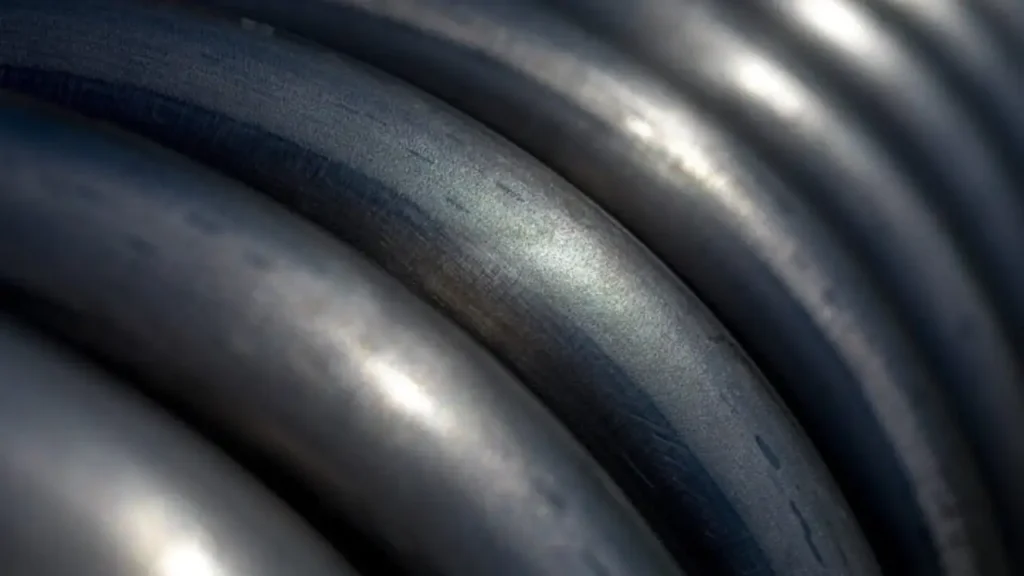
Rubber can become hard, stiff, or brittle because of aging, heat, sunlight, oxidation, or chemical exposure. Fortunately, some rubber products can regain flexibility with gentle heating, conditioning, or suitable softening agents. The right method depends on the rubber type and its condition.
Always test a small area first to avoid damage, swelling, cracking, or permanent deformation.
Tools Needed
- Warm water
- Heat-resistant container
- Soft cloth
- Rubber-safe conditioner
- Silicone-based lubricant
- Clean brush
- Protective gloves
- Hair dryer or heat gun with low-temperature setting
Step 1: Clean the Hardened Rubber
Clean the rubber thoroughly before attempting to soften it. Use mild soap, warm water, and a soft brush to remove dirt, grease, dust, and surface contaminants. Rinse away soap completely, then dry the rubber with a clean cloth. Cleaning helps conditioning treatments penetrate the rubber surface more evenly.
Step 2: Soak Rubber in Warm Water
Place the rubber item in warm water for several minutes to gently increase its flexibility. Keep the water comfortably warm rather than boiling hot, because excessive heat can deform rubber or accelerate deterioration. After soaking, remove the item carefully and gently bend it while it remains warm.
Step 3: Apply a Rubber-Safe Conditioner
Apply a rubber-safe conditioner evenly across the hardened surface using a clean cloth. Allow the conditioner to remain on the rubber according to the manufacturer’s instructions. The treatment can help restore surface flexibility and reduce dryness. Avoid petroleum-based products unless they are specifically confirmed as compatible with your rubber material.
Step 4: Use Gentle Heat
Warm the rubber gradually with a hair dryer or low-temperature heat gun. Keep the heat source moving continuously and maintain a safe distance from the surface. Gentle heating makes many rubber materials more flexible temporarily. Never overheat rubber, as excessive temperatures can cause melting, cracking, discoloration, or permanent deformation.
Step 5: Flex the Rubber Carefully
Once the rubber becomes warmer and more flexible, gently stretch, bend, or massage it without forcing the material. Work gradually through stiff areas rather than applying sudden pressure. Repeated gentle movement can help distribute conditioning treatments and improve flexibility. Stop immediately if you notice cracking, tearing, unusual swelling, or surface damage.
Step 6: Let the Rubber Rest
After treatment, place the rubber somewhere cool, dry, and away from direct sunlight. Allow it to rest until it returns to normal temperature. Inspect its flexibility and surface condition afterward. If necessary, repeat conditioning and gentle heating carefully. Severely degraded rubber may not recover and should be replaced instead.
What Makes Rubber Soft and Pliable?
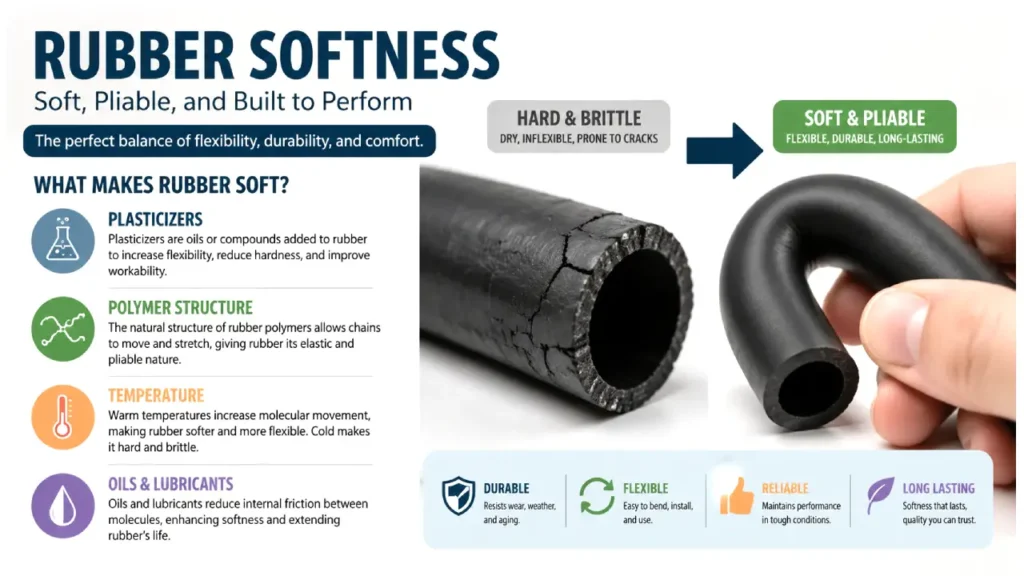
Rubber is naturally flexible because of its unique molecular structure and elastic properties. However, its softness and pliability depend on several factors, including rubber type, formulation, temperature, plasticizers, and processing methods.
Rubber hose manufacturers carefully control these factors to achieve the right balance of softness, strength, durability, and flexibility for different applications.
1. Rubber Polymer Structure
The molecular structure of rubber allows its long polymer chains to move and stretch when force is applied. Natural rubber and many synthetic rubbers contain flexible chains that contribute to elasticity. The degree of molecular movement strongly affects whether rubber feels soft, flexible, firm, or rigid.
- Long, flexible polymer chains
- Low glass transition temperature
- High molecular mobility
- Elastic molecular structure
2. Plasticizers
Plasticizers can make certain rubber compounds softer by increasing molecular mobility and reducing stiffness. They are commonly incorporated during rubber compounding to achieve specific flexibility requirements. The amount and type of plasticizer must be carefully controlled because excessive amounts can reduce strength, durability, or resistance to chemicals and heat.
- Increase flexibility
- Reduce hardness
- Improve processing
- Control softness
3. Temperature
Temperature significantly affects rubber flexibility. As rubber becomes warmer, its polymer chains generally move more easily, making the material feel softer and more pliable. Conversely, low temperatures can make some rubber compounds stiff or brittle. Each rubber type has a specific temperature range where flexibility remains optimal.
- Warm temperatures increase flexibility
- Cold temperatures can increase stiffness
- Glass transition temperature affects behavior
- Excessive heat may cause degradation
4. Rubber Formulation
A rubber compound contains more than just the base polymer. Manufacturers combine additives such as oils, fillers, plasticizers, curing agents, antioxidants, and processing aids to control hardness and flexibility. By adjusting the formulation, manufacturers can produce rubber products ranging from very soft seals to firm industrial components.
- Base polymer
- Oils and plasticizers
- Fillers
- Curing agents
- Antioxidants
5. Crosslinking Level
Crosslinking connects rubber polymer chains into a three-dimensional network. A higher degree of crosslinking generally increases hardness, strength, and dimensional stability, while excessive crosslinking can reduce flexibility. Manufacturers therefore adjust curing conditions and crosslink density to create the desired combination of elasticity, softness, and mechanical performance.
- Controls hardness
- Improves strength
- Affects elasticity
- Influences permanent deformation
6. Fillers and Additives
Fillers can significantly change the physical properties of rubber. Carbon black, silica, calcium carbonate, and other materials may increase strength, wear resistance, stiffness, or hardness. The selected filler and its concentration influence the final texture and flexibility, allowing manufacturers to customize rubber for specific performance requirements.
- Carbon black
- Silica
- Calcium carbonate
- Processing additives
- Reinforcing agents
7. Rubber Type
Different rubber materials naturally have different levels of flexibility. Natural rubber is known for excellent elasticity, while materials such as silicone rubber can maintain flexibility across broad temperature ranges. EPDM, NBR, neoprene, and other synthetic rubbers are formulated for specific environments, affecting their softness and pliability.
- Natural rubber
- Silicone rubber
- EPDM rubber
- NBR rubber
- Neoprene rubber
Why Choose Our Rubber Hoses?
Our rubber hoses are designed for durability, flexibility, and long-term performance. Made from high-quality materials, they withstand extreme conditions and heavy usage. Choosing our hoses ensures reliability for various applications, from industrial machinery to home projects, while reducing maintenance needs.
- Superior durability: Crafted with premium rubber, our hoses resist wear, abrasion, and cracking. This ensures a longer lifespan compared to standard hoses, making them a cost-effective choice for continuous use in demanding environments, reducing the need for frequent replacements and maintenance.
- Flexible design: Engineered for easy bending and maneuvering, our hoses maintain performance without kinking. The flexibility allows smoother installation in tight spaces, preventing damage during use and making them suitable for a wide range of applications, from automotive to industrial setups.
- Chemical and temperature resistance: Our rubber hoses handle extreme temperatures and exposure to oils, chemicals, or other harsh substances. This makes them reliable in challenging conditions, providing consistent performance while protecting connected equipment and ensuring safe and efficient operation in diverse environments.
Conclusion
Knowing how to soften rubber hose can make installation, routing, and handling easier when a hose has become stiff. However, softening is not suitable for every hose. Always check the hose material, operating conditions, and signs of damage before applying heat, liquids, or other treatments to improve flexibility.
For hydraulic applications, hose flexibility should never come at the expense of pressure resistance, safety, or durability. If a hose shows cracks, swelling, severe hardening, or other damage, replacement is generally more appropriate than attempting to restore it. Using the correct hose for each application also helps maintain reliable performance.
If you need dependable hydraulic hoses for industrial or commercial applications, we can provide suitable solutions based on your requirements. Get wholesale hydraulic hoses from Gushan Rubber and choose hoses designed for reliable performance, flexibility, and durability across demanding working environments and hydraulic systems.