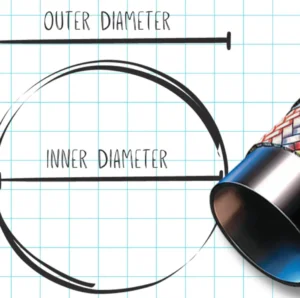
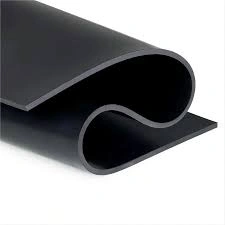
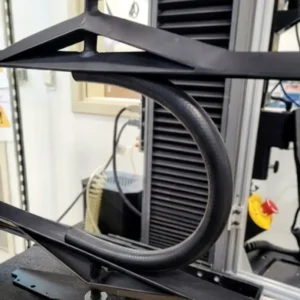
We introduce you to Nitrile Butadiene Rubber (NBR), an elastomer prized for its exceptional chemical resilience. Also known as Buna-N, this synthetic rubber is a cornerstone in industries facing tough conditions. We provide materials with outstanding resistance to various oils and fuels, making them essential for critical sealing and fluid handling applications.
We manufacture NBR components that excel where general-purpose rubber fails. Our products, from gaskets and O-rings to hoses, maintain their structural integrity and sealing power even when exposed to petroleum-based fluids and lubricants. We offer reliable solutions ensuring maximum performance and operational safety across multiple demanding sectors worldwide.
What is NBR Rubber?
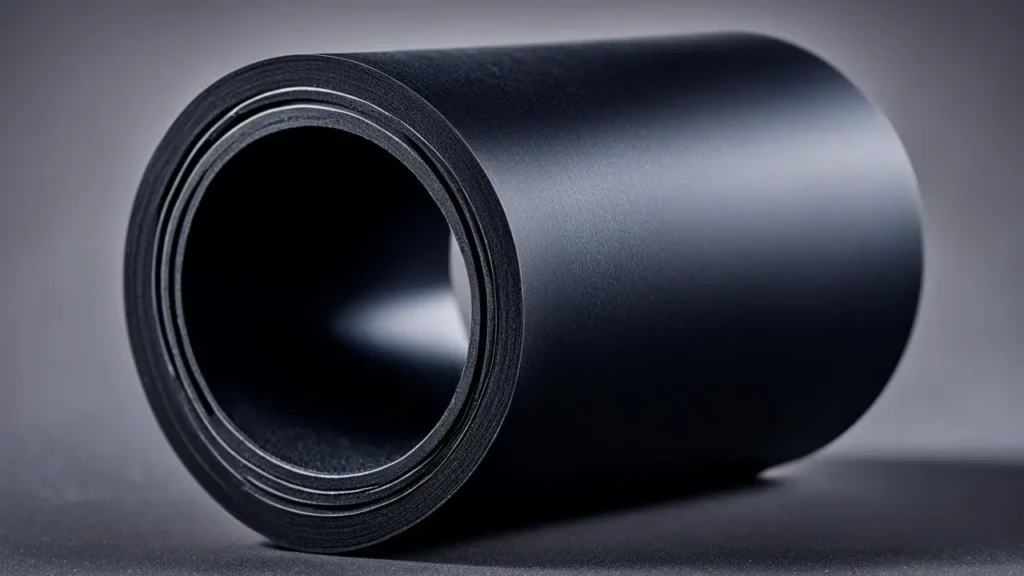
NBR is the abbreviation for Nitrile Butadiene Rubber, a synthetic elastomer widely recognized for its unique chemical properties. As a specialist rubber, its primary function is to provide outstanding resistance to petroleum-based fluids, including oils, fuels, and hydraulic fluids.
This makes it an indispensable material for creating seals, gaskets, and hoses in automotive engines, industrial machinery, and aerospace systems where contact with oil is inevitable. While durable and cost-effective, its main limitation is poor resistance to UV light and ozone.
The Core Properties of NBR Rubber
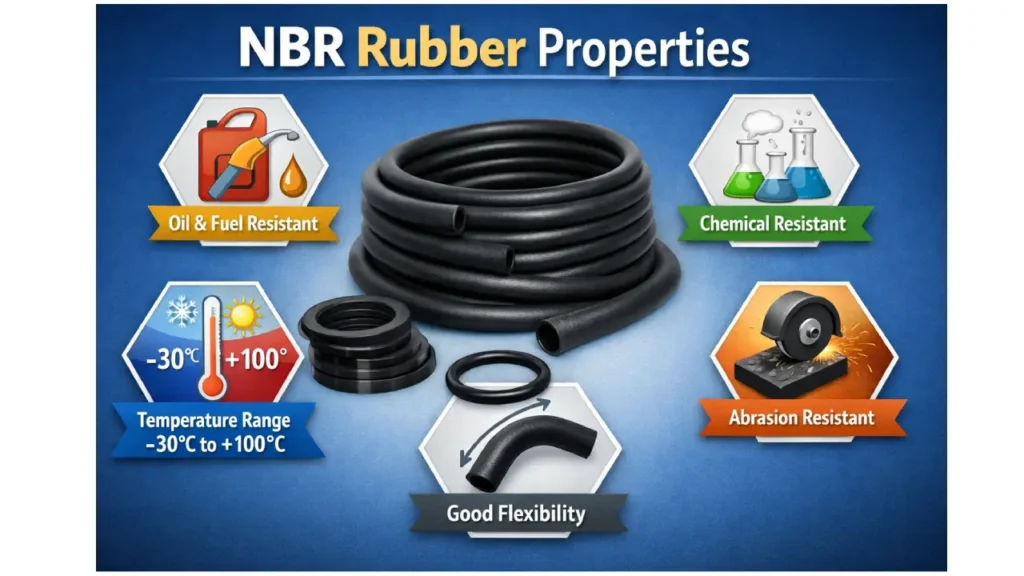
Nitrile Butadiene Rubber (NBR) is known for its versatile properties, making it ideal for a wide range of applications. Its ability to resist oils, fuels, and chemicals, combined with its durability, makes it a popular choice in industries such as automotive and manufacturing.
- Oil and Fuel Resistance: NBR rubber exhibits excellent resistance to oils, fuels, and other petroleum-based fluids, which makes it a top choice for sealing materials in the automotive and aerospace industries. This property ensures that NBR maintains its integrity even in harsh environments with exposure to oils.
- Temperature Stability: NBR rubber can withstand a wide temperature range, typically from -30°C to +100°C. This makes it ideal for use in both cold and hot environments, as the material retains its flexibility and performance even under extreme thermal conditions, ensuring reliable operation over time.
- Chemical Resistance: NBR rubber offers good resistance to a variety of chemicals, including acids and solvents. This makes it suitable for use in industries such as chemical processing, where contact with corrosive substances is common. Its chemical stability helps in maintaining long-term durability in demanding applications.
- Abrasion Resistance: NBR rubber is highly resistant to wear and tear, especially when exposed to rough surfaces. Its abrasion resistance makes it ideal for applications where mechanical stress and friction are prevalent, such as seals, gaskets, and hoses, helping to extend the product’s lifespan.
- Flexibility: Despite its strong resistance to oils and chemicals, NBR rubber retains a high level of flexibility. This property allows it to be used in hoses, seals, and gaskets that require both strength and movement flexibility. NBR’s flexibility ensures smooth operation in dynamic environments.
NBR Hose Uses
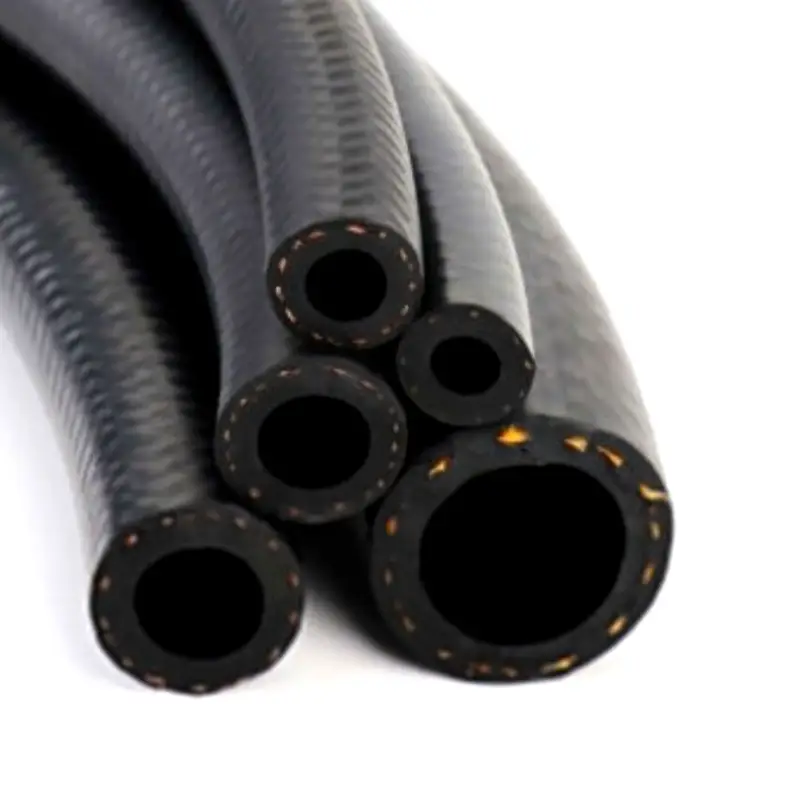
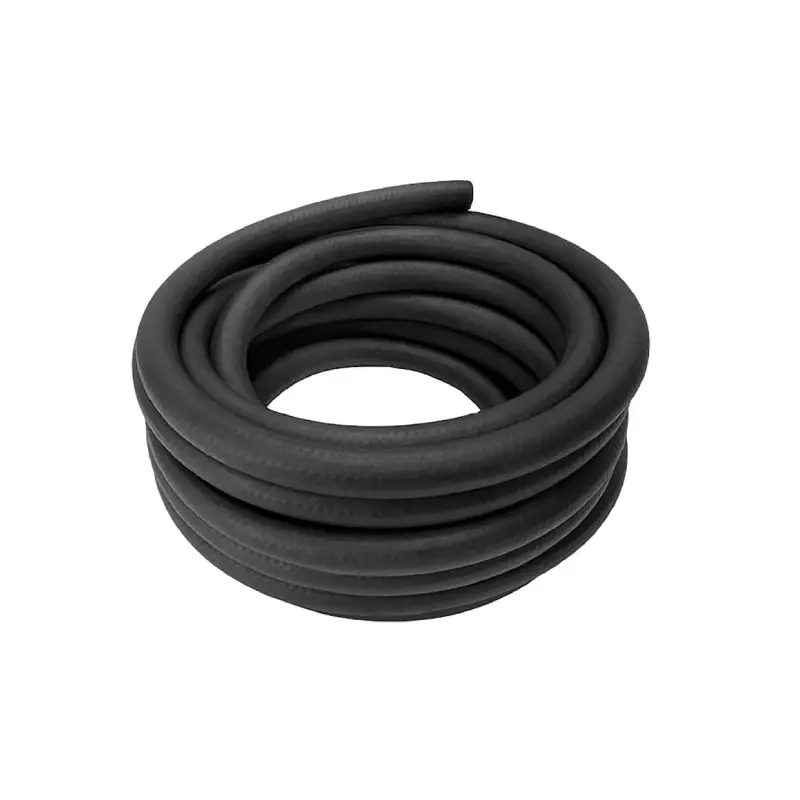
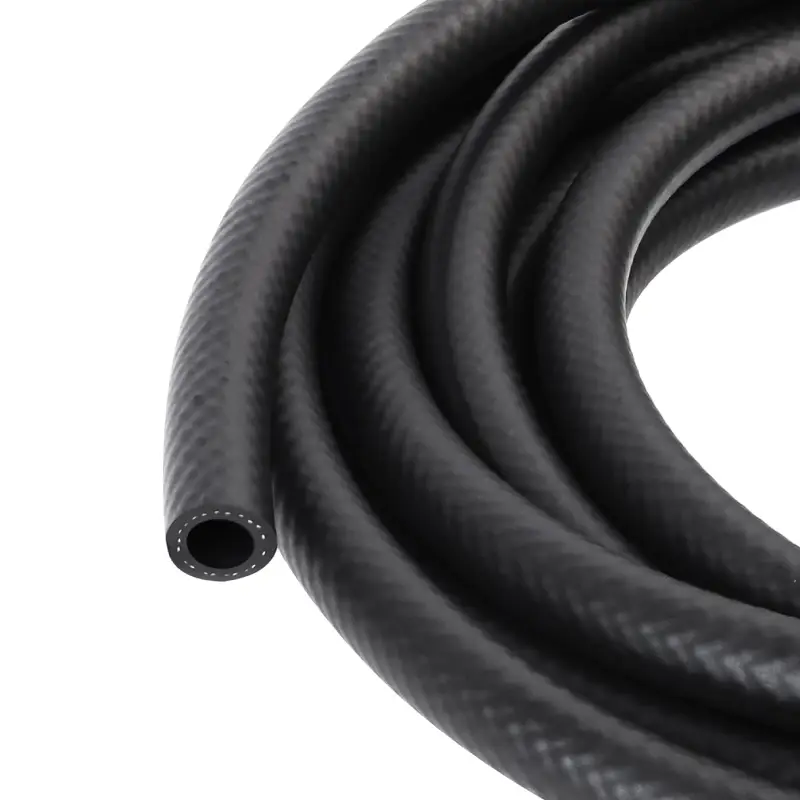
Nitrile Butadiene Rubber (NBR) hoses are versatile and commonly used in industries where resistance to oils, chemicals, and extreme temperatures is essential. These hoses are designed to withstand harsh conditions while offering durability and flexibility for a range of applications.
- Fuel and Oil Transfer: NBR hoses are frequently used in the automotive and industrial sectors for transferring fuels and oils. Their resistance to petroleum-based products ensures that these hoses maintain their structural integrity even when exposed to harsh fuels, preventing leaks and enhancing safety in fuel systems.
- Chemical Handling: In industries such as chemical processing, NBR hoses are essential for transporting various chemicals. Their excellent chemical resistance prevents degradation or failure when in contact with a wide range of acids, bases, and solvents, making them ideal for use in refineries, laboratories, and manufacturing plants.
- Hydraulic Systems: NBR hoses are widely used in hydraulic systems due to their strength and flexibility. These hoses effectively handle high-pressure fluids and provide reliable performance in heavy-duty machinery. The robust construction of NBR hoses makes them suitable for applications such as construction equipment and agricultural machinery.
- Automotive Applications: In the automotive industry, NBR hoses are used for various applications such as fuel lines, oil lines, and brake systems. Their ability to withstand extreme temperatures and exposure to oils and fuels makes them an essential component in ensuring the reliability and performance of automotive systems.
- Food and Beverage Industry: NBR hoses are also used in food and beverage applications where resistance to oils and fats is required. These hoses are commonly found in food processing plants, where they are used to transfer oils and fatty liquids, ensuring durability and safety when handling food-grade materials.
What is NBR Rubber Hose Used For?
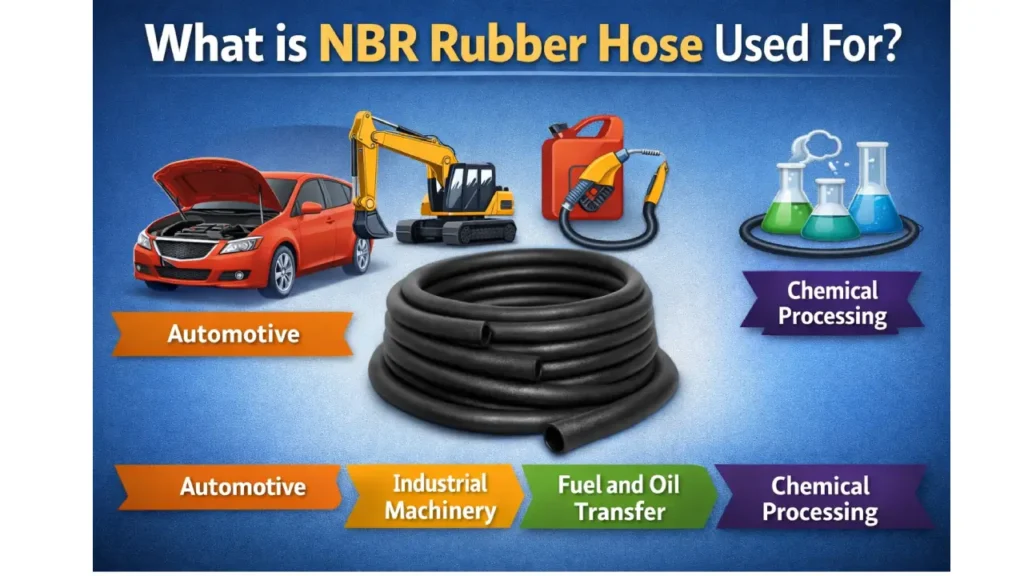
NBR rubber hoses are crucial components in systems requiring the safe and efficient transport of various fluids, especially those based on petroleum.
We manufacture these hoses using Nitrile Butadiene Rubber due to its inherent resistance to oils and fuels. We supply robust, flexible hoses for numerous demanding environments where chemical compatibility is paramount.
- Fuel and Oil Transfer: We provide NBR hoses essential for handling gasoline, diesel, and lubricating oils. Their unique composition prevents material degradation and swelling, ensuring secure and reliable fluid transfer in automotive, marine, and industrial engines. We supply these durable hoses for lasting performance in every setting.
- Hydraulic Systems: We offer specialized NBR hoses for hydraulic systems, where they convey high-pressure hydraulic fluids. This application demands exceptional strength and oil resistance, ensuring efficient power transmission without leakage or material failure. We manufacture dependable hydraulic hoses to maintain system integrity.
- Industrial Cleaning Equipment: We supply NBR hoses used in high-pressure washdowns and industrial cleaning equipment, often exposed to detergents, mild chemicals, and hot water. Their resilience against these substances ensures a longer service life and reliable operation. We provide solutions that stand up to rigorous cleaning routines.
- Chemical Processing Lines: In certain chemical processing applications, especially those involving water-based fluids or mild solvents compatible with NBR, we provide hoses for general fluid handling. Their controlled resistance profile makes them a practical, cost-effective choice for various non-aggressive fluid lines. We offer reliable conveyance options.
NBR in the Automotive Industry
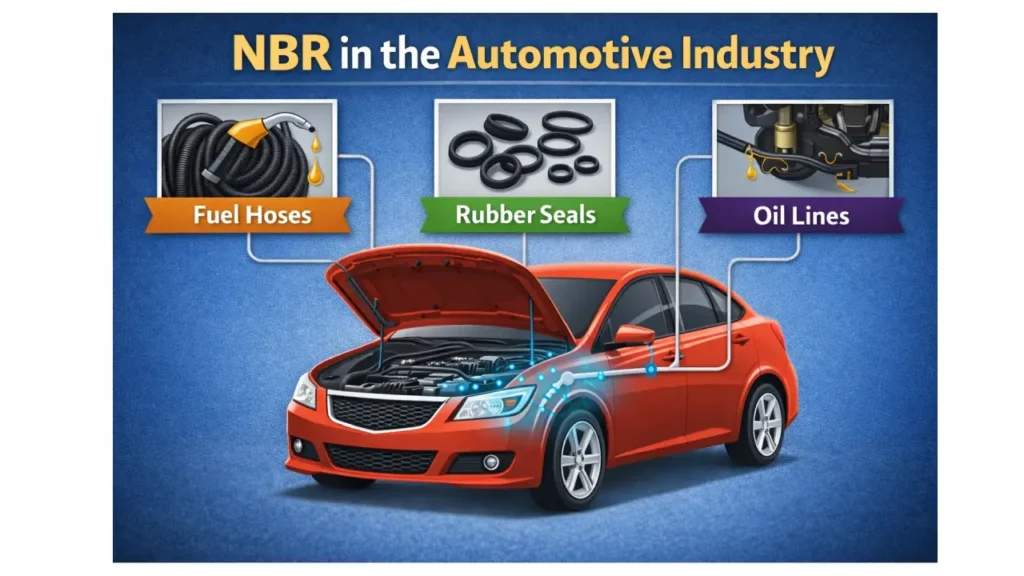
The automotive industry is one of the biggest consumers of NBR rubber, and for good reason. Under the hood of any vehicle, numerous systems handle volatile and corrosive fluids like gasoline, oil, and transmission fluid. NBR’s ability to resist these substances without degrading makes it a non-negotiable choice for thousands of components.
Its reliability in this high-stakes environment is a testament to its durability and performance.
- Fuel Hoses and Lines: The most obvious application is in fuel delivery systems. Nitrile rubber is the perfect material for hoses that transfer gasoline or diesel from the tank to the engine, as it won’t swell or break down from prolonged contact with fuel.
- O-Rings and Gaskets: Every engine is a complex system of interconnected parts that require thousands of seals. NBR O-rings and gaskets are used throughout the engine to prevent leaks of oil, coolant, and other fluids, ensuring the system runs at peak efficiency.
- Shaft Seals: Where shafts rotate, like on a crankshaft or gearbox, an NBR seal is used to keep lubricating oil inside and contaminants out. Its combination of oil resistance and abrasion resistance is crucial here.
- Diaphragms: Found in fuel pumps and pressure regulators, Nitrile rubber diaphragms flex millions of times throughout their lifespan. Their durability and chemical resistance make them perfect for this demanding task.
NBR in Industrial Machinery
Walk into any factory, warehouse, or machine shop, and you’ll find countless machines relying on NBR rubber. It’s the silent protector of hydraulic and pneumatic systems, ensuring that powerful machinery operates without fluid leaks or failures.
From the largest presses to the smallest valves, NBR provides the reliability needed for safe and efficient industrial production.
| Application | Why NBR is Used |
| Hydraulic Seals | NBR rubber’s low compression set and excellent oil resistance are vital for sealing high-pressure hydraulic fluids, preventing costly leaks and system failures. |
| Conveyor Belts | The high abrasion resistance of NBR makes it a durable choice for conveyor belts that transport materials in tough environments, ensuring a long service life. |
| Industrial Hoses | Hoses for transferring oils, lubricants, and chemicals are often made from Nitrile rubber to ensure safe and reliable fluid transfer without degradation. |
| Protective Gloves | Nitrile gloves are widely used in chemical plants and manufacturing for their durability and resistance to a wide range of chemicals, protecting workers’ hands. |
NBR in the Aerospace Sector
Aerospace engineering demands materials of the highest quality and reliability, as a component failure can have catastrophic consequences. Because of its proven performance and resistance to jet fuel and hydraulic fluids, NBR rubber is a trusted material in aircraft. Its ability to maintain a strong seal and resist degradation in extreme conditions is a testament to its exceptional quality.
- Fuel System Gaskets and Seals: In an aircraft’s fuel system, NBR is used for gaskets and O-rings to ensure a leak-proof seal, which is critical for safety and efficiency.
- Hydraulic System O-Rings: Aircraft hydraulic systems operate at very high pressures to control flight surfaces and landing gear. Nitrile rubber O-rings are used to seal these systems, providing a reliable barrier against hydraulic fluid leaks.
- Tank Linings: NBR is sometimes used as a lining for fuel tanks, providing an extra layer of protection against fuel corrosion and leakage.
What Are the Advantages of NBR Rubber?
It’s fair to ask why NBR is chosen so often when there are many other types of rubber. The answer lies in its unique value proposition. NBR rubber isn’t always the best in every single category, but it offers a near-perfect balance of essential properties at an affordable price point.
This makes it an ideal choice when compared to other popular rubber materials.
| Material | Key Advantage | NBR’s Value Proposition |
| Natural Rubber | Superior elasticity and tensile strength | NBR has far better oil and chemical resistance. |
| EPDM | Excellent weather and ozone resistance | NBR is vastly superior for oil, fuel, and hydrocarbon exposure. |
| Viton (FKM) | Extremely high temperature and chemical resistance | NBR is much more affordable for a wider range of standard applications. |
| SBR | Cost and abrasion resistance | NBR is the only choice when contact with oil is a factor. |
Tips for Using NBR Rubber
While Nitrile rubber is a fantastic material, it isn’t perfect for every single application. A complete understanding of its limitations is just as important as knowing its strengths. To ensure a component performs as expected, we need to be aware of what NBR doesn’t do well.
- Ozone and UV Exposure: NBR rubber has poor resistance to ozone and UV light. If a component is intended for long-term outdoor use, especially in direct sunlight, it will degrade and crack over time. In these cases, a material like EPDM is a better choice.
- Specific Chemical Incompatibility: While it resists most oils, NBR is not suitable for contact with some strong solvents, ketones, or esters. Always check a chemical compatibility chart if your application involves a non-petroleum fluid.
- High-Temperature Limits: For applications with sustained temperatures above 120°C, NBR’s performance will begin to degrade. For extreme heat, a material like Viton (FKM) is required.
Conclusion
NBR rubber is undeniably a crucial material, offering a powerful combination of flexibility, durability, and chemical resistance. Its widespread use in automotive, aerospace, and oil industries underscores its value in preventing leaks and ensuring system efficiency. We supply these dependable components, reinforcing that NBR is the reliable choice for challenging environments.
We provide a comprehensive range of NBR-based sealing and conveyance products tailored to meet specific industrial needs. From robust gaskets to precision-engineered seals, our inventory ensures your machinery operates smoothly and safely. We understand the need for reliable materials and deliver products that meet rigorous performance standards across every application.
If your operations require durable, oil-resistant fluid conveyance, choose our specialized products. We manufacture and supply wholesale NBR hydraulic hoses through Gushan Rubber, offering superior solutions designed for high-pressure and oil-intensive applications. Contact us today to secure your source of top-tier NBR components directly from Gushan Rubber.