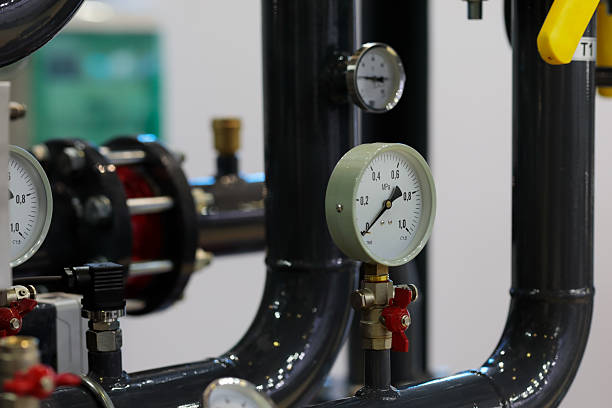
The performance of any fluid transfer system hinges on its hoses, and choosing the correct braided hose reinforcement is critical for safety and efficiency. This guide will clarify the primary differences between the three main types: Textile, wire, and Aramid reinforcement. Understanding the strengths of each material ensures you select a hose that meets your application’s pressure and flexibility needs.
Selecting the right hose is crucial, whether you’re working with hydraulics, fuel lines, or pneumatic systems. Your choice of braiding determines the hose’s overall pressure rating, flexibility, and resistance to environmental stress. We’ll break down the construction and ideal uses for each braided material to help you make an informed decision.
What is a Braided Hose?
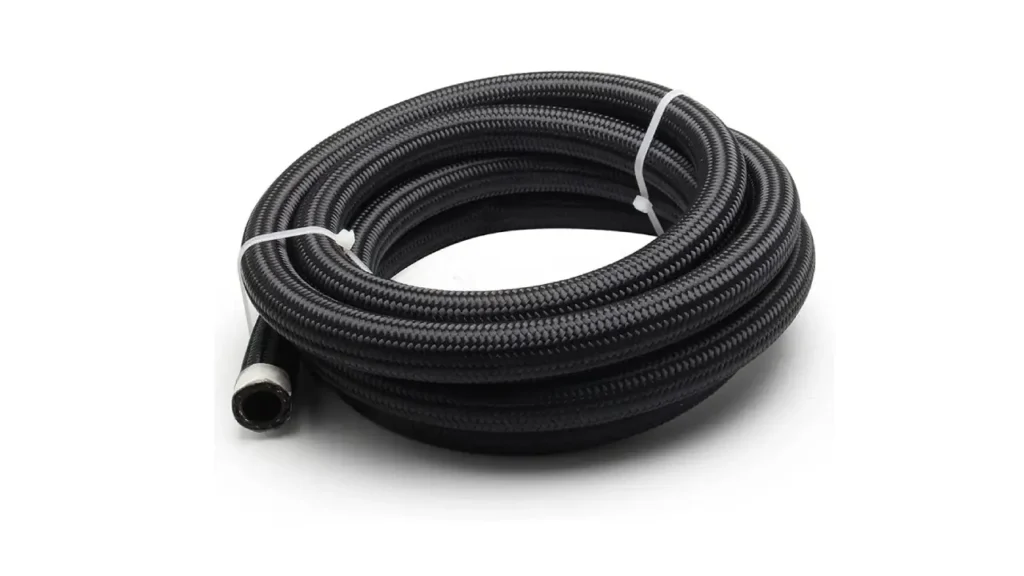
A braided hose is a flexible conduit designed to safely and efficiently transport fluids (liquid or gas) under pressure. Its distinguishing characteristic is a reinforcing layer of woven strands (the “braid”) over an inner tube, which provides superior strength and durability compared to unbraided hoses.
Braided Hose Construction and Purpose
A typical braided hose has three main components:
Inner Tube (Liner): This is the innermost layer that is in contact with the transported fluid. It’s usually made from materials like synthetic rubber (e.g., EPDM, Nitrile), PVC, or PTFE (Teflon), chosen for compatibility with the fluid, temperature, and pressure requirements.
Braided Reinforcement: This layer is woven around the inner tube using high-tensile materials, most commonly stainless steel wire, but also synthetic fibers like nylon or aramid.
- Primary Function: The braid resists the internal pressure, preventing the hose from expanding, bursting, or elongating (also known as a “pressure carrier”).
- Secondary Function: It provides significant protection against kinking, abrasion, and external damage, improving the hose’s resilience and longevity.
Outer Cover (Sheath): In some designs, an external layer of rubber, PVC, or another polymer protects the braid from the environment, chemicals, or further abrasion.
Types of Braided Hoses
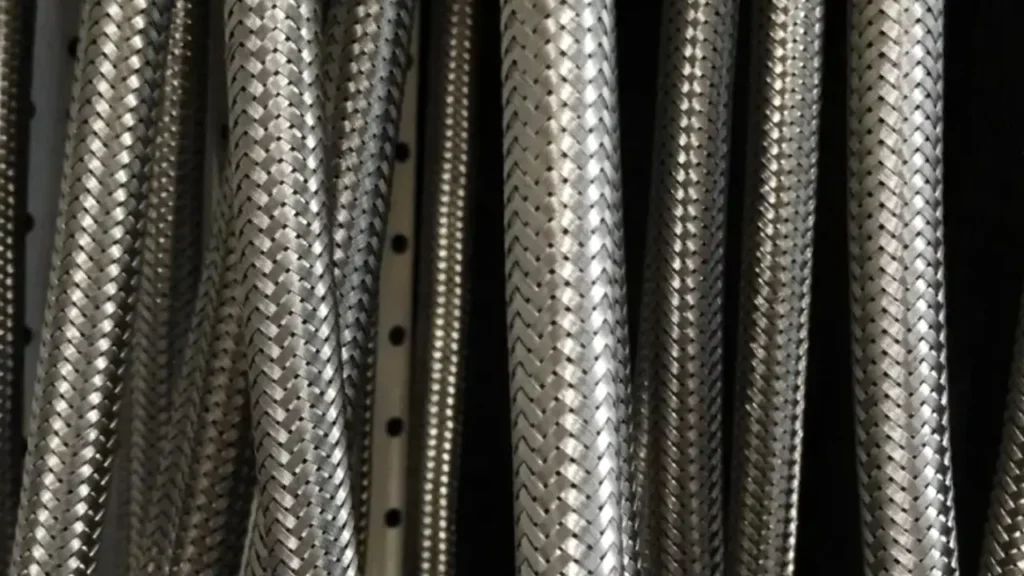
Braided hoses are engineered with a durable reinforcing layer—often metal or fiber—woven over an inner tube, providing exceptional resistance to internal pressure, abrasion, and kinking. This construction allows them to perform reliably in demanding environments, unlike standard hoses, and makes them essential for high-performance and safety-critical applications across various industries.
Stainless Steel Braided Hoses
These are one of the most common and robust types, featuring a flexible inner tube, often made of PTFE (Teflon) or rubber, surrounded by a densely woven stainless steel wire braid. The steel reinforcement is key to providing outstanding tensile strength and protection against external damage, making them suitable for the most rigorous industrial and automotive tasks.
Stainless steel hoses are widely utilized in hydraulic systems, brake lines, fuel delivery, and high-temperature steam lines because they offer an excellent combination of pressure rating, corrosion resistance, and temperature stability. The metal braid prevents the inner hose from expanding under extreme pressure, maintaining consistent flow and significantly enhancing the overall safety and longevity of the assembly.
PTFE Braided Hoses (Polytetrafluoroethylene)
PTFE braided hoses use a smooth or convoluted PTFE core tube, which is then reinforced with a stainless steel or fiber braid. The primary benefit of the PTFE core is its chemical inertness, providing superior resistance to nearly all industrial chemicals, solvents, and corrosive media that would rapidly degrade rubber or PVC.
These hoses are indispensable in the chemical, pharmaceutical, and food & beverage industries where fluid purity, non-contamination, and resistance to aggressive cleaning agents are paramount. The PTFE core combined with the high-strength braid delivers excellent flexibility and a wide temperature tolerance, allowing them to handle both cryogenic fluids and high-temperature steam efficiently.
Fiber or Synthetic Braided Hoses (e.g., Nylon, Aramid)
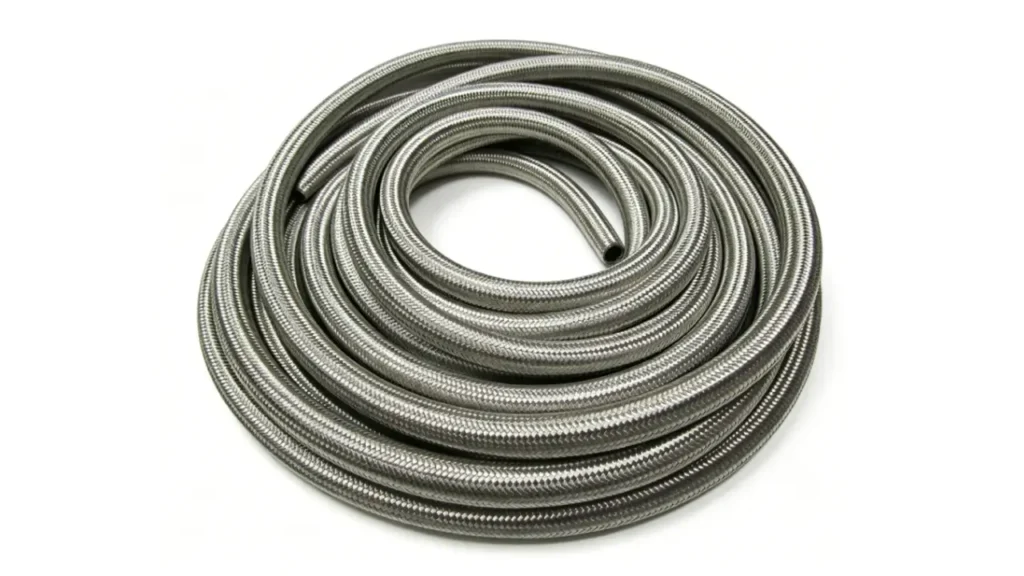
Fiber braided hoses utilize synthetic materials like nylon, polyester, or high-strength Aramid fibers (like Kevlar) for their reinforcing braid. Compared to steel, these hoses are notably lighter and more flexible, which can be an advantage in weight-sensitive applications or installations that require tighter routing and repeated flexing.
They are typically used in medium-to-low pressure applications where high chemical resistance or extreme temperature rating is not the primary requirement, such as in certain automotive fluid lines, air compressor hoses, and general-purpose water transfer. While they are more cost-effective and offer good resistance to UV light and kinking, their pressure and temperature limits are generally lower than their stainless steel counterparts.
Textile Braided Hoses
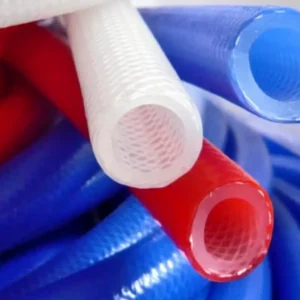
Textile braided hoses are lightweight and flexible, making them ideal for low-pressure applications. They are often used in water supply, air, and chemical transfer, where ease of handling and installation is a priority.
The braided textile layer reinforces the hose, preventing kinks and extending its service life. While not suitable for high-pressure systems, they provide cost-effective durability and adaptability for many everyday industrial and domestic tasks.
Wire Braided Hoses
Wire braided hoses feature a metal wire mesh that provides exceptional strength and pressure resistance. They are commonly used in hydraulic systems, fuel lines, and high-pressure fluid transfer applications.
The wire reinforcement prevents hose expansion and ensures stability under demanding conditions. These hoses are highly durable and resistant to wear, heat, and abrasion, making them suitable for heavy-duty industrial and automotive environments.
Aramid Braided Hoses
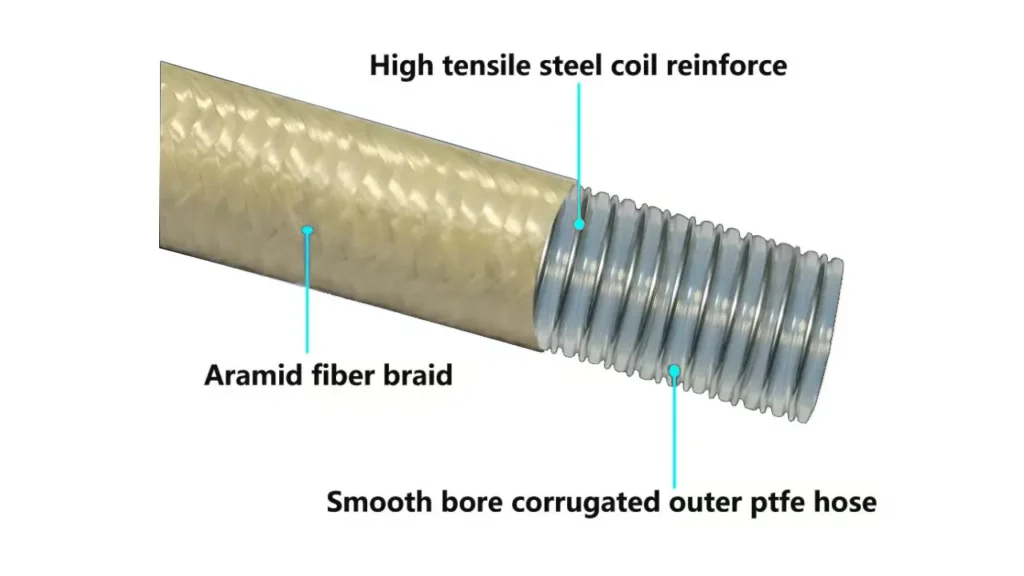
Aramid braided hoses are reinforced with aramid fibers, such as Kevlar, offering extreme strength and heat resistance. They are ideal for high-pressure, high-temperature, and demanding industrial applications.
The aramid braiding ensures minimal elongation under pressure and protects against impact and chemical degradation. These hoses are commonly found in aerospace, automotive, and hydraulic systems where safety and performance are critical.
Here is the chart showing you the different types of braided hoses:
| Type of Braided Hose | Core / Inner Tube | Reinforcement | Key Features | Typical Applications |
|---|---|---|---|---|
| Stainless Steel Braided | PTFE or Rubber | Stainless Steel Wire | High strength, abrasion & corrosion resistant | Hydraulic systems, brake lines, fuel delivery, high-temp steam lines |
| PTFE Braided | Smooth or Convoluted PTFE | Stainless Steel or Fiber | Chemically inert, flexible, wide temperature tolerance | Chemical, pharmaceutical, food & beverage industries |
| Fiber/Synthetic Braided (Nylon, Aramid) | Rubber or Synthetic | Nylon, Polyester, Aramid (Kevlar) | Lightweight, flexible, UV resistant | Automotive fluid lines, air compressors, water transfer |
| Textile Braided | Rubber or PVC | Textile fibers | Lightweight, flexible, kink-resistant | Water supply, air, chemical transfer |
| Wire Braided | Rubber or Synthetic | Metal Wire Mesh | High strength, pressure-resistant, durable | Hydraulic systems, fuel lines, high-pressure fluid transfer |
| Aramid Braided | Rubber or Synthetic | Aramid fibers (Kevlar) | Extreme strength, heat-resistant, minimal elongation | Aerospace, automotive, hydraulic systems |
Braided Hydraulic Hoses
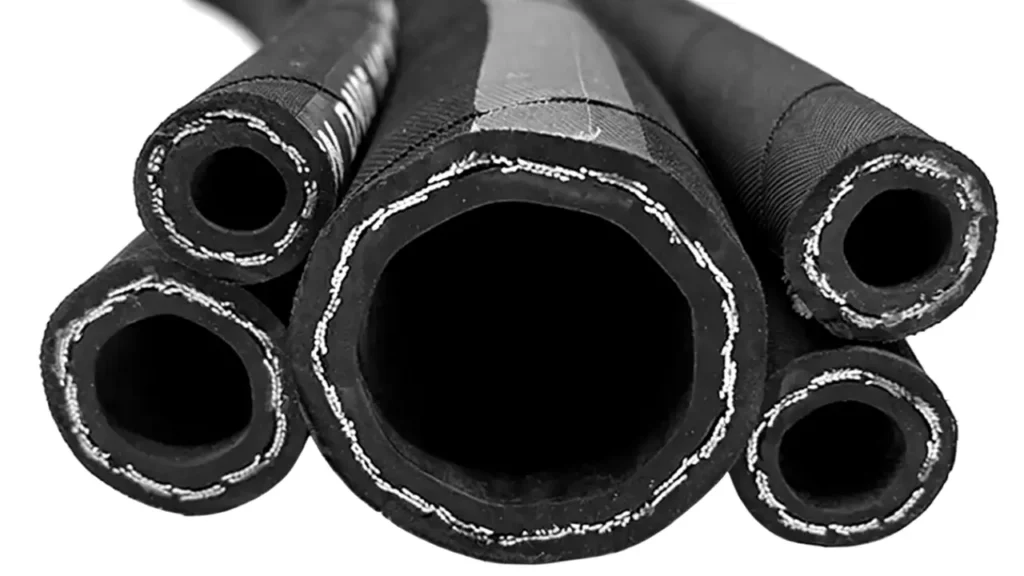
Braided hydraulic hoses are widely used in hydraulic systems that require flexibility, strength, and reliable pressure handling. Reinforced with braided steel wire layers, these hoses balance durability and ease of installation. They are suitable for many industrial, mobile, and agricultural applications where space constraints and movement are common.
- Reinforcement Design: Braided hydraulic hoses use steel wire woven in a crisscross pattern around the inner tube. This design provides strong pressure resistance while maintaining flexibility, allowing the hose to bend easily without kinking during installation or operation.
- Pressure Performance: These hoses are designed to handle medium to high working pressures depending on wire layers. The braided structure distributes pressure evenly, helping prevent hose expansion and ensuring stable fluid flow in demanding hydraulic systems.
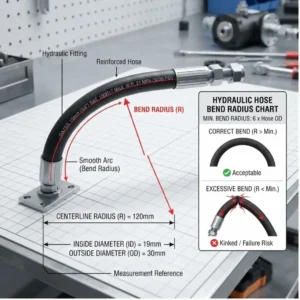
- Flexibility Advantage: Compared to spiral hoses, braided hydraulic hoses offer better flexibility and a smaller bend radius. This makes them ideal for compact equipment layouts, moving parts, and applications requiring frequent hose movement.
- Common Applications: Braided hoses are commonly used in construction equipment, agricultural machinery, industrial systems, and mobile hydraulics. Their balance of pressure capability and flexibility makes them suitable for steering, lifting, and control line applications.
- Service Life and Maintenance: Proper pressure selection and routing extend the life of braided hydraulic hoses. Regular inspection helps detect wear early, reducing the risk of leaks, unplanned downtime, and maintenance costs in hydraulic systems.
Why Are Braided Hoses So Important?
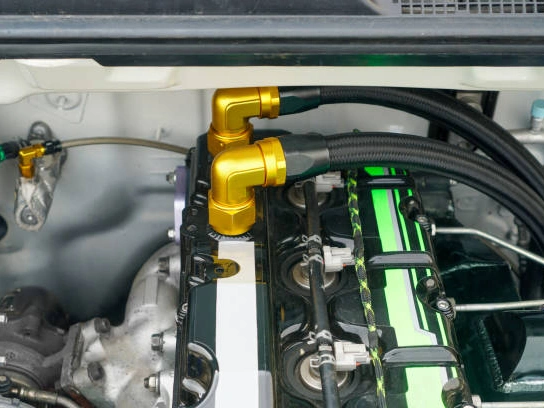
Braided hoses are crucial because their reinforcing weave provides superior strength, high-pressure tolerance, and exceptional durability, which is necessary for safety and performance in demanding applications like automotive, hydraulic, and industrial systems.
1. High-Pressure Capability
The core importance lies in the braided layer’s ability to contain significant internal pressure, preventing the inner tube from expanding, stretching, or catastrophically bursting. This reinforcement is vital for systems like hydraulic lines, brake systems, and high-pressure gas or fluid transfer lines, where failure could cause serious damage or injury.
2. Enhanced Safety and Reliability
Braided hoses are critical for system integrity and leak prevention, especially when transporting hazardous or volatile fluids under extreme operating conditions. The robust construction minimizes the risk of punctures, abrasions, and leaks, maintaining a secure flow and reducing the potential for costly downtime, environmental hazards, or catastrophic failures.
3. Superior Durability and Longevity
The outer braid, often stainless steel, acts as a protective shield against kinking, cuts, and external wear and tear in harsh environments. This resistance makes them significantly more durable and longer-lasting than standard rubber or plastic hoses, reducing replacement frequency and long-term maintenance costs across all industries.
4. Resistance to Extreme Conditions
Braided hoses are essential in applications exposed to high temperatures or corrosive chemicals because the material of the braid and liner can be specifically chosen to resist degradation. This allows them to maintain their structural integrity and performance when transferring hot oil, steam, or aggressive chemicals that would rapidly destroy unreinforced alternatives.
Braided Hose Types by Reinforcement Material
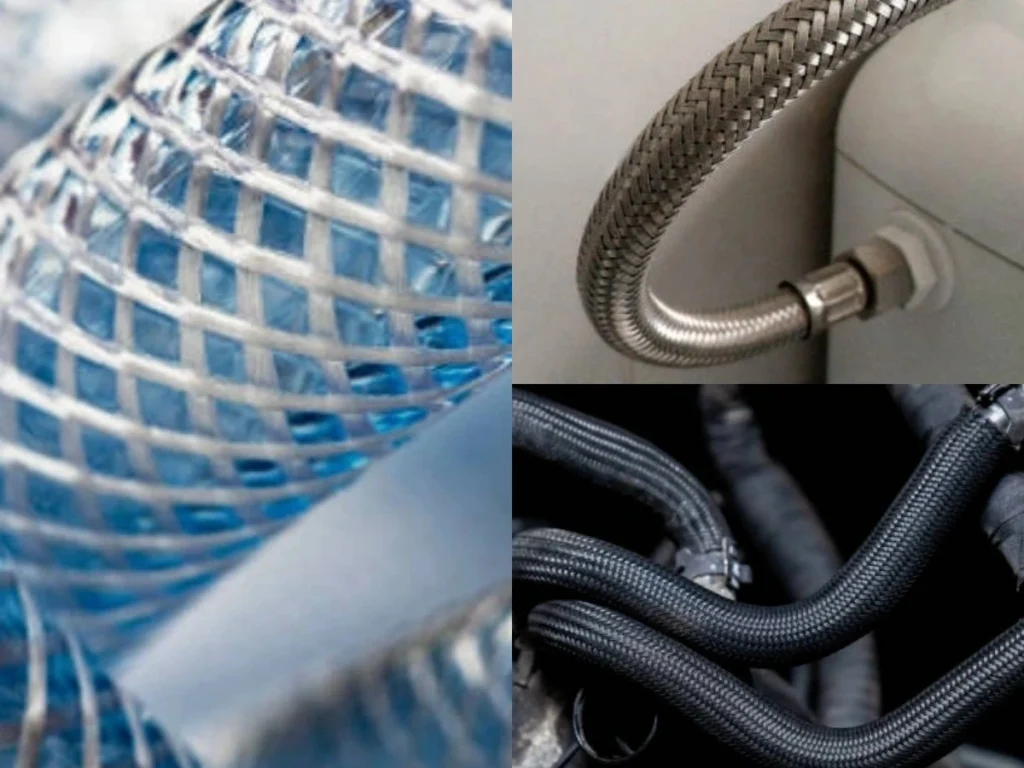
The material used for the braiding is a key factor in determining a hose’s performance. Depending on the application, we see a few different material choices. Each one brings unique properties to the table, making it suitable for specific environments and uses.
Stainless Steel Braided Hose
This is the most common and versatile type. Stainless steel braiding provides exceptional pressure resistance, corrosion resistance, and abrasion protection. We frequently find these hoses in automotive brake lines, fuel systems, and various industrial hydraulic applications. They not only look professional but also offer the highest level of safety and longevity.
Fiber Braided Hose
These hoses typically use synthetic fibers like polyester, nylon, or aramid fibers for the braid. Compared to metal, fiber-braided hoses are much lighter and more flexible. They are often used in low to medium-pressure applications, such as air hoses or general-purpose water lines, where high flexibility is a priority.
Hybrid Braided Hose
Some applications require a blend of benefits. For instance, a hose might have a stainless steel braid over one or more layers of fiber braiding. This hybrid design provides the strength of metal with the added flexibility and anti-kinking properties of the fiber layers, making them ideal for high-performance, high-pressure applications.
Braided Hose Types by Inner Tube Material
While the braiding provides the strength, the inner tube material dictates what fluid the hose can carry, as well as its resistance to temperature and chemical corrosion. Choosing the right inner tube is absolutely critical for the safety and integrity of fluid transfer.
PTFE Braided Hose
PTFE, commonly known as Teflon, is famous for its outstanding chemical resistance and wide temperature range. PTFE braided hose can handle almost any corrosive chemical, fuel, or solvent, making it the preferred choice for the pharmaceutical, food processing, and chemical industries. Its non-stick properties also make it easy to clean, meeting strict hygiene standards.
Rubber Braided Hose
Rubber inner tubes are a very common and cost-effective option. Depending on the rubber compound (e.g., NBR for oil, EPDM for water), they are widely used in hydraulic systems and general-purpose applications. Their flexibility and durability make them a reliable choice for countless everyday uses.
Silicone Braided Hose
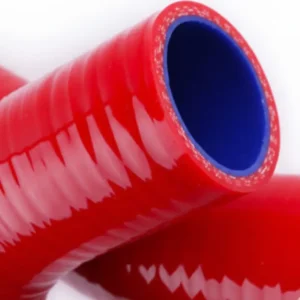
Silicone is known for its excellent high-temperature resistance. Silicone braided hose can withstand higher temperatures than standard rubber hoses, making it ideal for automotive cooling systems, turbocharger lines, and other applications that require both heat resistance and flexibility.
Braided Hose Applications
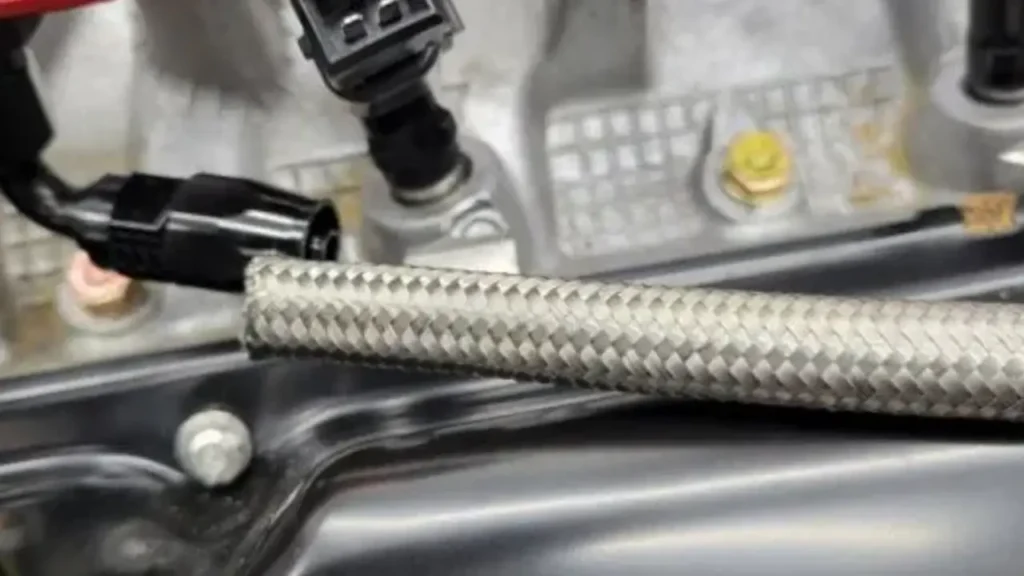
Braided hoses are versatile and widely used across industries due to their strength, flexibility, and durability. Their reinforced design allows them to handle high pressure and harsh conditions, making them suitable for applications ranging from automotive to industrial machinery and fluid transfer systems.
- Automotive systems: Braided hoses are commonly used in brake lines, fuel lines, and coolant systems. Their high-pressure resistance and flexibility ensure reliable performance under extreme temperatures and vibrations, improving vehicle safety and efficiency while reducing the risk of leaks or hose failure.
- Industrial machinery: These hoses transport hydraulic fluids, oils, and chemicals in manufacturing and processing equipment. Reinforced braided hoses withstand high pressures and mechanical stress, providing consistent flow, minimizing downtime, and ensuring safe operation in demanding industrial environments.
- Chemical and food processing: Braided hoses with compatible materials are used to transfer chemicals, beverages, and food products safely. Their reinforced structure prevents leaks and contamination, ensuring hygiene, regulatory compliance, and reliable performance in critical processing applications.
- Aerospace and marine applications: Braided hoses are ideal for aircraft and marine systems where high pressure, temperature fluctuations, and vibration resistance are crucial. They provide durability, safety, and flexibility, making them essential for fuel, hydraulic, and fluid systems in these demanding environments.
Benefits of Textile Braided Hoses
Textile braided hoses are valued for their flexibility, durability, and cost-effectiveness. They provide reliable reinforcement for moderate-pressure applications while remaining lightweight and easy to handle.
Their versatility makes them ideal for automotive, industrial, and fluid transfer systems, ensuring smooth operation and long-lasting performance.
- Flexible and easy to install: Textile braided hoses can bend and curve around tight spaces without kinking. This flexibility reduces installation time, simplifies routing in complex systems, and allows for adjustments or repositioning, making them practical for a variety of applications.
- Durable under moderate pressure: While not suitable for extreme pressures, textile braided hoses resist internal stress and maintain structural integrity under typical operating conditions. They provide reliable fluid flow, preventing leaks and ensuring consistent performance in everyday industrial and automotive tasks.
- Cost-effective solution: Textile hoses offer a strong, reinforced option at a lower cost than wire or aramid alternatives. Their affordability makes them suitable for projects where performance and budget must be balanced, without compromising on safety or reliability.
- Versatile applications: These hoses are compatible with water, air, and light chemicals, making them suitable for multiple industries. Their combination of strength, flexibility, and affordability ensures they meet the needs of automotive systems, machinery, and general fluid transport.
How to Choose the Right Braided Hose?
Choosing the right braided hose is essential for safety, efficiency, and long-term performance. Consider factors like pressure rating, temperature tolerance, flexibility, and the type of fluid being transferred. Selecting the appropriate reinforcement material ensures durability and prevents leaks or hose failure in demanding applications.
- Pressure rating: Determine the maximum pressure your application requires. Hoses must withstand operating pressure without bursting or deforming. Choosing a hose with an adequate safety margin prevents accidents, ensures consistent performance, and prolongs the lifespan of your fluid transfer system.
- Temperature tolerance: Check the hose’s temperature range to ensure it can handle extreme heat or cold. Exposure to temperatures beyond the rated range can degrade materials, reduce flexibility, and compromise safety. Proper selection maintains hose integrity and operational reliability.
- Fluid compatibility: Consider the type of fluid—oil, water, chemicals, or gas—that will flow through the hose. Incompatible materials can cause corrosion, swelling, or leaks. Selecting the correct hose material ensures safe and efficient transfer while protecting equipment from damage.
- Reinforcement type: Choose between textile, wire, or aramid reinforcement based on application needs. Textile offers flexibility, wire provides high pressure resistance, and aramid delivers strength under extreme conditions. The right reinforcement balances performance, durability, and ease of installation.
Conclusion
Ultimately, selecting the right braided hose depends on balancing the required working pressure with flexibility and budget. For lighter, low-pressure applications, textile reinforcement offers excellent kink resistance. When high pressure and durability are paramount, wire braiding is the clear industry standard, while Aramid provides a lightweight, high-strength alternative for specialized use cases.
By carefully considering the fluid, temperature, and environmental factors, you can now confidently select the ideal hose reinforcement type. Correct hose specification prevents premature failure, minimizes downtime, and guarantees the safety and efficiency of your entire fluid transfer system. Don’t compromise on quality or performance for your critical operations.
To secure reliable, high-quality braided hoses for your commercial needs, partner with us. You can get wholesale braided hoses from our Gushan Rubber supply, where we offer competitive pricing and customization across all textile, wire, and Aramid types. Contact us today for bulk orders and technical consultation on your specific hose requirements.