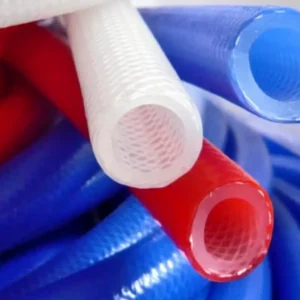
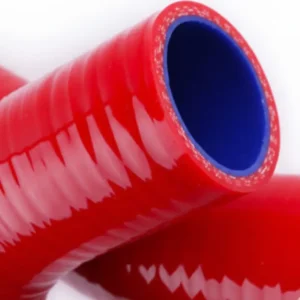
Choosing the right rubber compound is a critical decision that can determine the success or failure of a product. With so many options available, it’s easy to feel overwhelmed. At our core, we believe that understanding the fundamental differences between materials is the key to making a sound choice.
Two of the most common and versatile rubber compounds are EPDM and NBR, and while they may look similar, their properties and ideal applications are worlds apart. In this comprehensive guide, we’ll break down the key differences between EPDM and NBR rubber to help you select the perfect material for your specific needs.
What is EPDM Rubber?
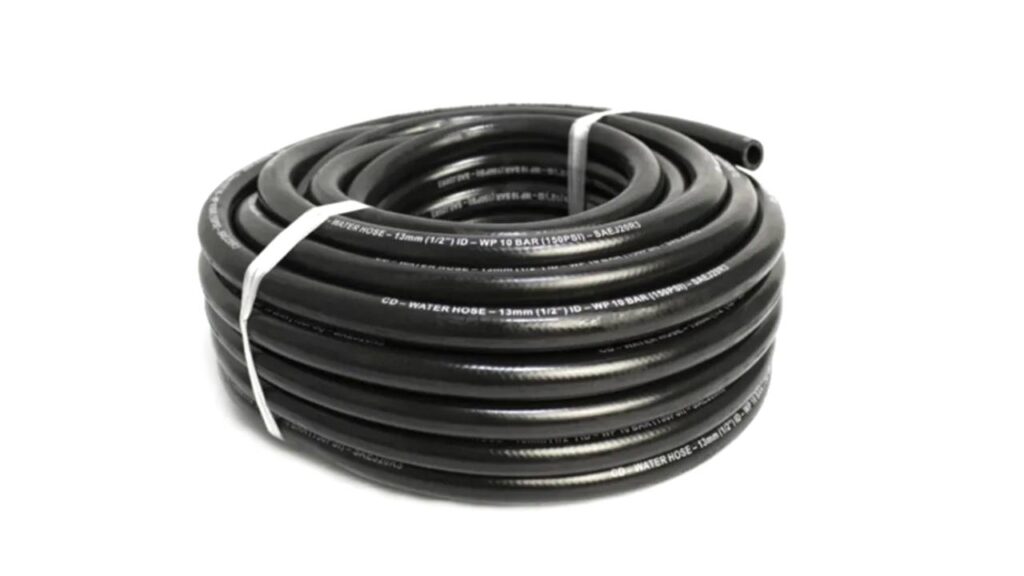
EPDM rubber (Ethylene Propylene Diene Monomer) is a synthetic rubber known for its excellent resistance to heat, ozone, and weathering. It is widely used in industries requiring durability and flexibility in harsh environments, offering long-term performance in extreme conditions.
- Automotive Applications: EPDM is used in automotive seals, gaskets, and weatherstripping due to its ability to withstand high temperatures and resist ozone degradation.
- Roofing Materials: EPDM is often utilized in commercial roofing for its superior weather resistance, helping to maintain roof integrity under UV exposure and extreme temperatures.
- Water Management Systems: EPDM rubber hoses and seals are ideal for water-related applications, resisting water, steam, and other environmental factors in irrigation and plumbing systems.
- Electrical Insulation: EPDM is used in electrical cables for insulation, providing resistance to heat, electrical conductivity, and harsh outdoor exposure, ensuring longevity.
What is NBR Rubber?
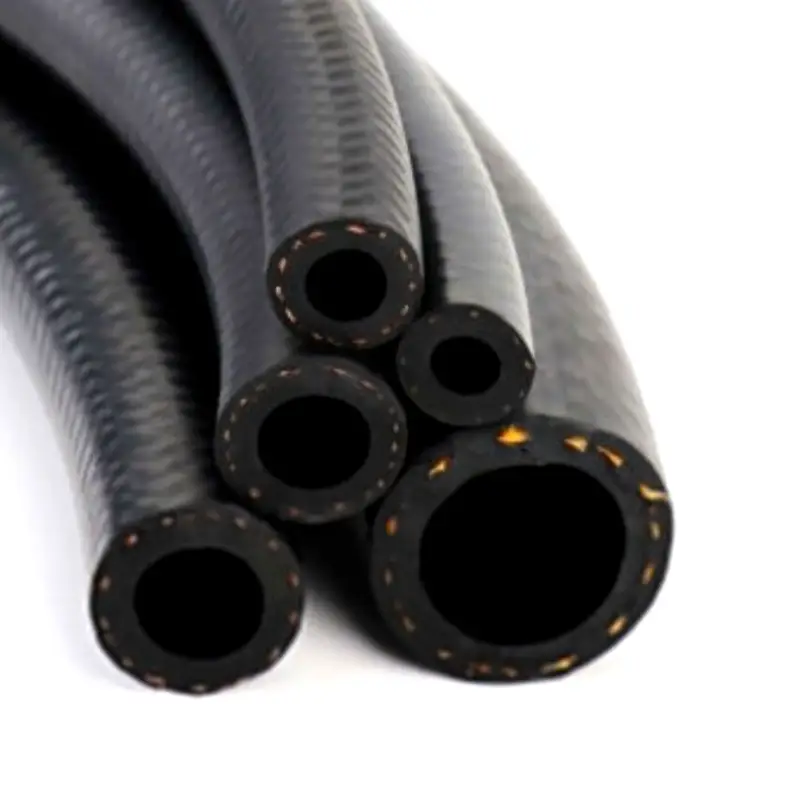
NBR, or Nitrile Butadiene Rubber, is a synthetic elastomer renowned for its primary strength: superior resistance to oils, fuels, and other hydrocarbons. Unlike EPDM, NBR is a polar compound, which gives it the opposite properties.
For our customers working in automotive, industrial, and aerospace industries, NBR is an indispensable material for any application where oil, fuel, or hydraulic fluid sealing is a requirement. It is the go-to choice for preventing leaks and protecting critical systems.
Key Characteristics of NBR Rubber:
- Excellent Oil & Fuel Resistance: The ideal choice for sealing against petroleum-based lubricants and fuels.
- Good Abrasion Resistance: Durable and long-lasting in dynamic applications.
- Poor Weather Resistance: Susceptible to degradation from UV light and ozone.
- Limited Temperature Range: Not suitable for applications with extremely high or low temperatures.
EPDM vs NBR Rubber
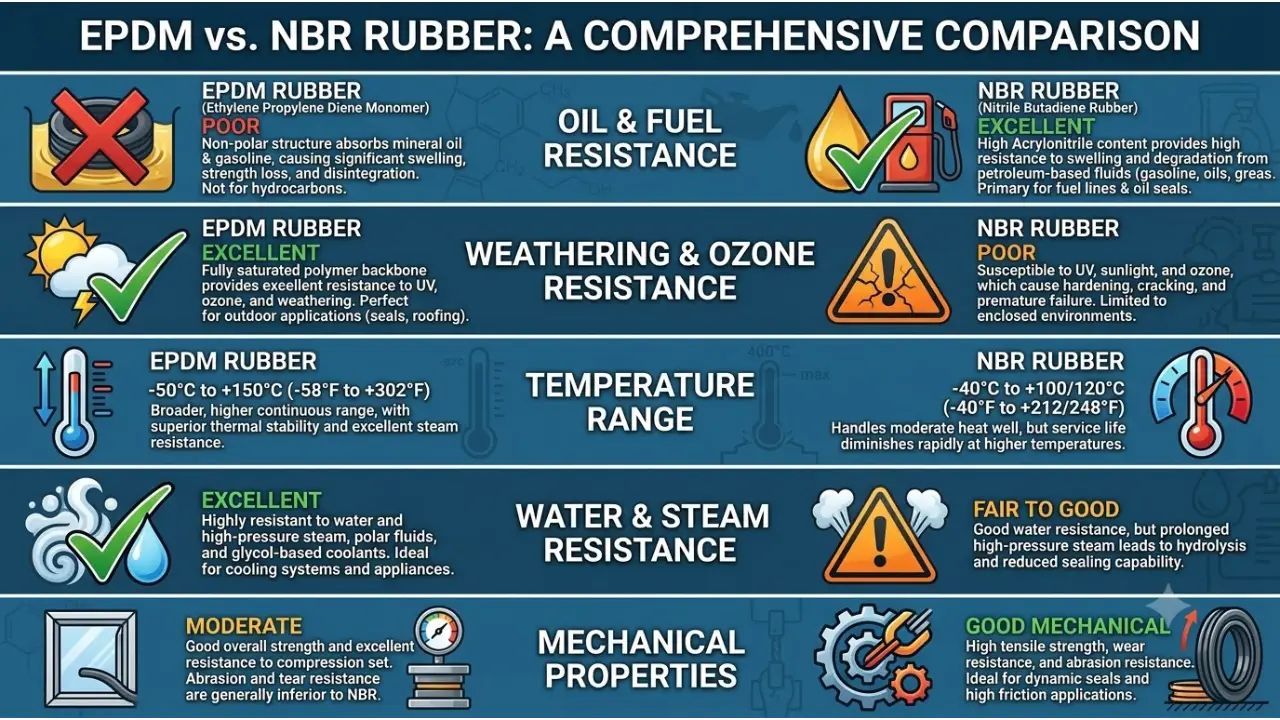
Nitrile Butadiene Rubber (NBR) and Ethylene Propylene Diene Monomer (EPDM) are two of the most common synthetic rubbers used for seals and hoses, but their suitability differs dramatically based on the working environment. The core distinction lies in their molecular structure, which dictates their resistance to oil, water, and outdoor elements.
Selecting the wrong material can lead to premature system failure.
1. Oil and Fuel Resistance
NBR Rubber: Nitrile rubber is the gold standard for sealing applications involving petroleum-based fluids. Its polymer chain contains acrylonitrile, a polar group that makes the material highly resistant to swelling and degradation when exposed to oils, greases, gasoline, and hydraulic fluids. This strong oil compatibility makes NBR the primary choice for fuel lines, oil seals, and hydraulic system gaskets in the automotive and aerospace industries.
EPDM Rubber: EPDM has poor resistance to petroleum-based oils and fuels. When exposed to non-polar hydraulic fluids like mineral oil or gasoline, EPDM absorbs the oil, causing it to swell significantly, lose its mechanical strength, and eventually disintegrate. For this reason, EPDM is strictly avoided in applications involving direct contact with hydrocarbons, such as engine oil sumps or fuel systems.
2. Weathering and Ozone Resistance
NBR Rubber: Nitrile rubber has poor resistance to outdoor elements. Exposure to UV light, sunlight, and ozone (a natural component of air and a byproduct of electrical discharge) causes the rubber to harden, crack, and fail prematurely. NBR components are typically limited to indoor, enclosed, or protected environments, such as inside machinery or beneath vehicle hoods.
EPDM Rubber: EPDM offers excellent resistance to ozone, UV, and general weathering. Its fully saturated polymer backbone prevents the chemical reactions that cause other rubbers to crack when exposed to the atmosphere. This makes EPDM the preferred material for outdoor applications, such as window seals, weatherstripping, roofing membranes, and automotive cooling system hoses.
3. Temperature Range
NBR Rubber: Standard NBR formulations typically handle a temperature range from approximately −40∘C up to +100°C or +120°C. While it performs well at moderate heat, its service life diminishes rapidly above this range. Low-temperature flexibility is also generally adequate, but not as exceptional as EPDM.
EPDM Rubber: EPDM generally withstands a broader and higher continuous temperature range, typically from −50∘C up to +150∘C. Its superior thermal stability and excellent resistance to steam make it the better choice for high-temperature coolant hoses, brake systems, and industrial steam applications.
4. Water and Steam Resistance
NBR Rubber: NBR has good resistance to water and ethylene glycol-based coolants. However, it is not the ideal choice for high-pressure, high-temperature steam applications. Prolonged exposure to hot water or steam can lead to hydrolysis and a gradual reduction in the material’s sealing capability.
EPDM Rubber: EPDM rubber is known for its excellent resistance to water and steam. It is widely used in water systems, appliances, and automotive cooling systems because it resists degradation from polar fluids, including water, steam, and glycol-based brake fluids.
5. Mechanical Properties
NBR Rubber: NBR offers good mechanical properties, including high tensile strength, wear resistance, and abrasion resistance. This makes it well-suited for dynamic seals and applications where the rubber is subjected to friction or mechanical stress, such as rolling components and high-pressure seals in hydraulic systems.
EPDM Rubber: While EPDM has good overall strength and excellent resistance to compression set (ability to return to its original shape), its abrasion and tear resistance are generally inferior to NBR. EPDM is typically chosen more for static sealing, weatherproofing, and fluid transfer, where mechanical wear is not the primary failure mode.
Here are some differences between NBR hoses and EPDM hoses:
| Feature | NBR (Nitrile Butadiene Rubber) | EPDM (Ethylene Propylene Diene Monomer) |
| Oil and Fuel Resistance | Excellent (The material of choice) | Poor (Swelling and degradation occur) |
| Ozone/Weather Resistance | Poor (Cracks when exposed to UV/Ozone) | Excellent (The material of choice) |
| Max Continuous Temperature | Up to +100℃ to +120℃ | Up to +150℃ |
| Water and Steam Resistance | Good (Adequate for water/coolant) | Excellent (Ideal for steam and water systems) |
| Abrasion Resistance | Good to Excellent | Fair to Good (Inferior to NBR) |
NBR and EPDM Rubber, Which is Better?
There isn’t a single “better” choice between NBR and EPDM rubber—it really depends on the working environment.
EPDM (Ethylene Propylene Diene Monomer) performs best in outdoor and weather-exposed conditions. It has excellent resistance to UV rays, ozone, heat, and aging, which makes it ideal for seals, roofing, HVAC systems, and water-based applications where long-term durability in changing weather matters.
NBR (Nitrile Butadiene Rubber), on the other hand, is the stronger option when oils, fuels, and hydrocarbons are involved. It offers excellent resistance to petroleum-based fluids and is widely used in fuel hoses, gaskets, and hydraulic systems. However, it does not perform well under prolonged UV or ozone exposure. In short, EPDM is the go-to for weather resistance, while NBR is better for oil and fuel resistance.
How to Choose EPDM and NBR Rubber Hoses?
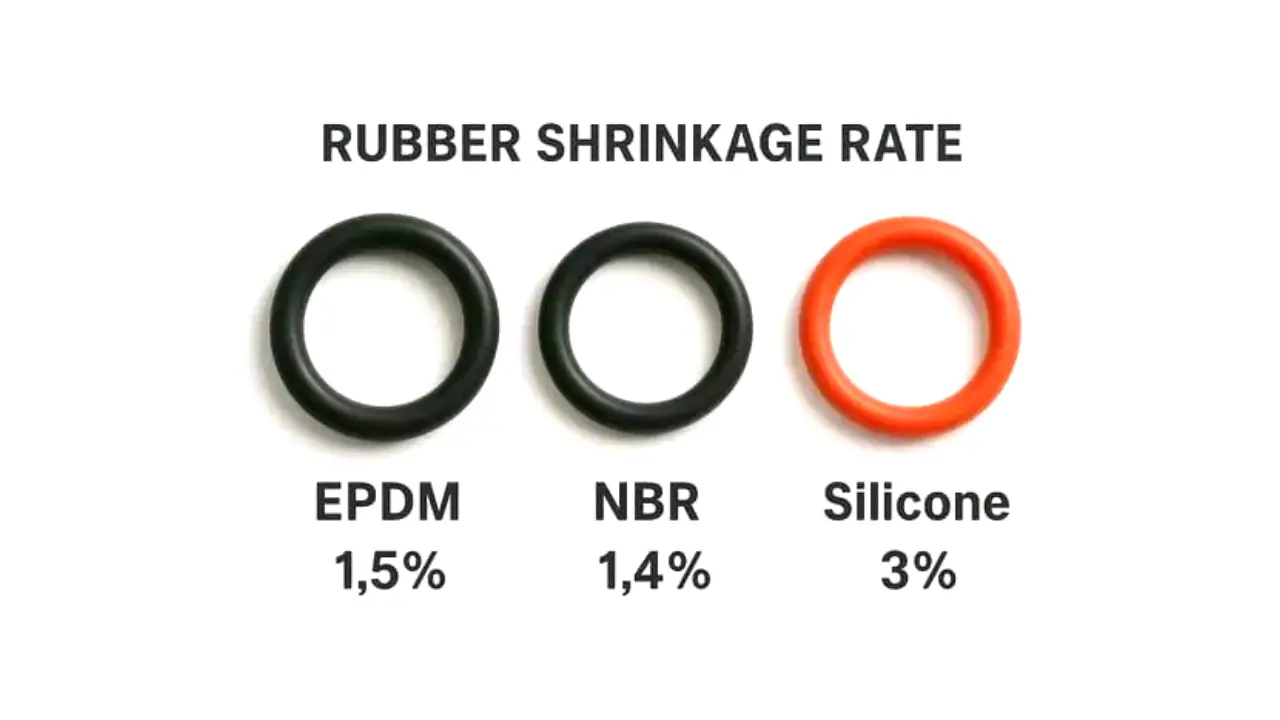
Choosing between EPDM and NBR rubber hoses is a critical decision that directly impacts system longevity and performance. We must carefully evaluate the media being transferred and the operating environment, as these two elastomers have fundamentally opposing chemical resistances.
The wrong choice will lead to rapid hose failure due to swelling or premature cracking.
Key Factors for Selecting EPDM vs NBR
- Fluid Compatibility (Polar vs. Non-Polar): Select NBR for transferring non-polar fluids like petroleum-based oils, gasoline, diesel, and hydraulic fluid. Conversely, choose EPDM for polar fluids, including water, steam, glycol-based coolants, and brake fluids. The difference in their molecular structure dictates which media the hoses can safely handle without degrading.
- Environmental Exposure (Outdoor vs. Enclosed): Choose EPDM for applications exposed to the outdoors, as it provides excellent resistance to ozone, UV light, and general weathering. The material is inherently stable and resists surface cracking. Use NBR only for enclosed, protected environments, such as internal machinery or areas strictly shielded from sunlight and atmospheric aging.
- Operating Temperature and Steam: We prefer EPDM for applications involving high-temperature water or steam, as it maintains superior stability and integrity up to approximately +150 °C. NBR is adequate for moderate temperatures but should be avoided above +120 °C and in high-steam environments, as its performance properties begin to diminish.
- Low-Temperature Flexibility: Opt for EPDM in environments where flexibility must be maintained at extremely cold temperatures, as it remains highly flexible down to around −50°C. NBR becomes stiffer and can lose its sealing capability below approximately −30 °C. This factor is crucial for components operating in frigid climates.
- Mechanical Stress and Abrasion: Choose NBR when the hose material is subjected to high mechanical wear, abrasion, or dynamic forces, such as seals or roller components. NBR generally offers better tensile strength and tear resistance than EPDM. Use EPDM where the primary demand is resistance to environmental factors rather than physical stress.
Applications for EPDM and NBR
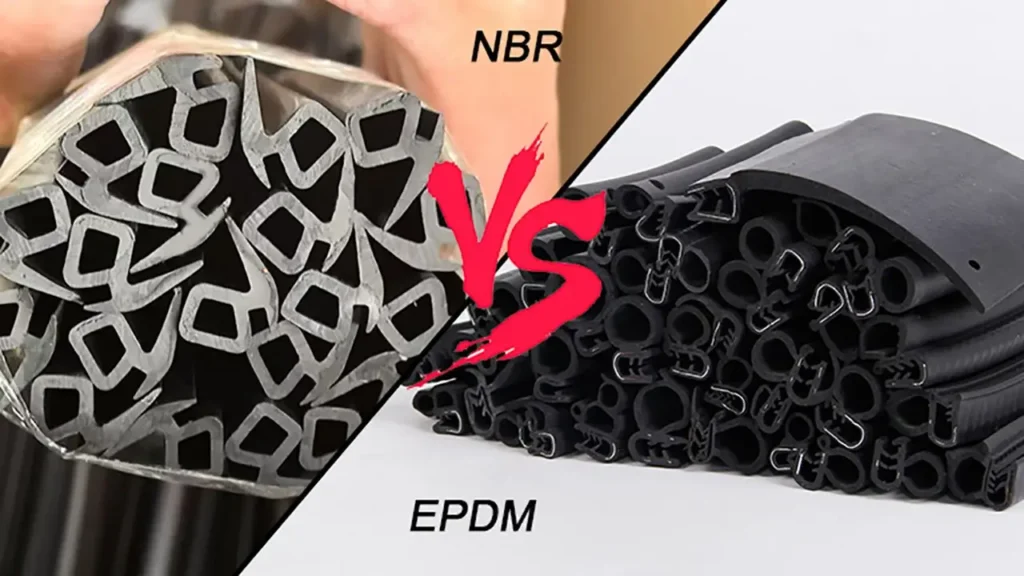
EPDM and NBR are versatile synthetic rubbers used across industries, each excelling in specific environments. EPDM is perfect for outdoor, heat, and weather-resistant applications, while NBR shines in oil, fuel, and chemical exposure. Understanding their strengths helps select the right material for hoses, seals, gaskets, and other critical components to ensure durability and performance.
EPDM Rubber Applications
EPDM rubber is widely used where weather, heat, and chemical resistance are essential. Its versatility makes it suitable for many industries, from automotive to construction, providing durable performance in harsh conditions.
- Automotive Seals and Hoses – EPDM is ideal for radiator hoses, window seals, and weatherstripping. It withstands high temperatures, ozone, and UV exposure, ensuring long-lasting performance in vehicles without cracking or degrading over time.
- Roofing and Waterproofing – EPDM sheets and membranes are commonly used for flat roofs and waterproofing solutions. They resist harsh weather conditions, prevent leaks, and maintain flexibility, reducing maintenance costs for buildings and structures.
- Electrical Insulation – EPDM serves as insulation for wires and cables. Its resistance to heat and weathering ensures reliable protection of electrical systems in outdoor and industrial environments.
- Industrial Gaskets and Seals – EPDM is used in pumps, valves, and piping systems. Its chemical and temperature resistance makes it perfect for industrial sealing applications where reliability and durability are critical.
NBR Rubber Applications
NBR rubber is valued for its excellent oil, fuel, and chemical resistance. It is commonly applied in environments where exposure to petroleum-based products is frequent, making it a go-to choice for automotive and industrial applications.
- Fuel and oil hoses – NBR is perfect for fuel lines, oil hoses, and gaskets. Its strong resistance to petroleum-based fluids ensures safety and longevity in vehicles and machinery.
- Seals and gaskets – NBR is used in sealing applications like O-rings and gaskets. It maintains flexibility and strength, preventing leaks in systems exposed to oils, fuels, and other chemicals.
- Hydraulic and pneumatic components – NBR is suitable for hydraulic seals and pneumatic parts. Its chemical resistance ensures consistent performance in industrial and automotive systems.
- Protective coatings and gloves – NBR is applied in protective gloves and coatings. Its resistance to oils and chemicals provides safety in laboratories, factories, and maintenance work.
Conclusion
Understanding the differences between EPDM and NBR rubber helps you choose the right material for your specific applications. EPDM excels in weather, ozone, and heat resistance, making it ideal for outdoor and automotive uses, while NBR offers superior oil and fuel resistance, perfect for industrial and hydraulic systems.
Selecting the appropriate rubber type ensures longevity, safety, and optimal performance for your equipment. By knowing each material’s strengths and limitations, you can prevent failures, reduce maintenance costs, and improve overall efficiency in your operations.
For reliable and high-performance rubber hoses, trust Gushan Rubber. We offer wholesale options for EPDM, NBR, and other rubber hoses to meet all your industrial and commercial needs. Contact us today to get the right hoses for your projects!