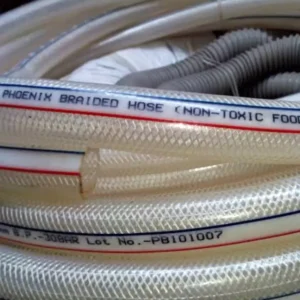
Choosing the right hose is essential for safety, performance, and long-term reliability. Braided and non-braided hoses may look similar, but their construction and capabilities differ significantly. Understanding these differences helps you select the best option for your specific application.
Braided hoses include a reinforced layer that improves pressure resistance, durability, and kink protection. Non-braided hoses are simpler, lighter, and often more flexible, making them suitable for low-pressure fluid transfer and general-purpose uses.
What is a Braided Hose?
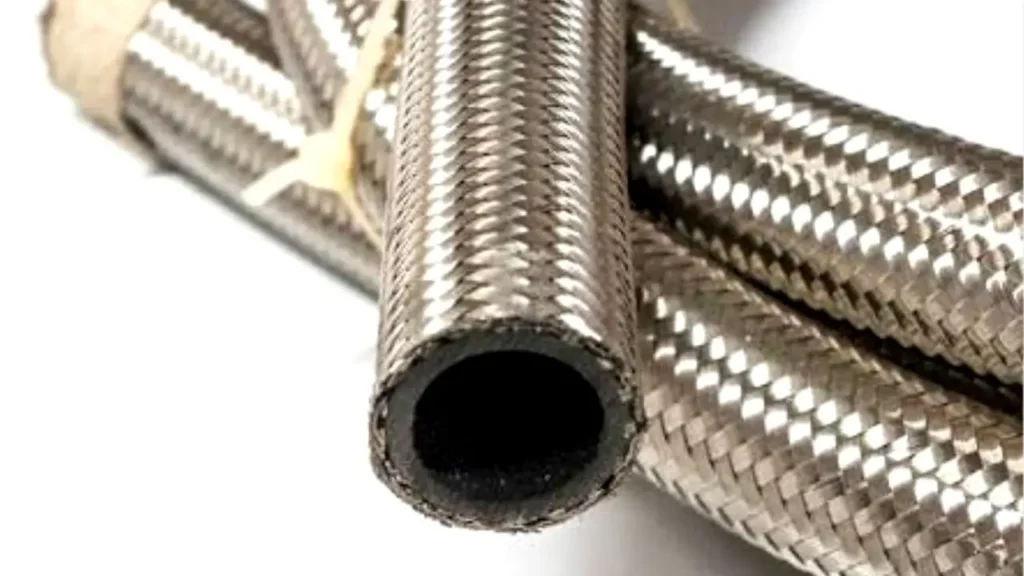
A braided hose is a flexible tube reinforced with woven textile, stainless steel, or synthetic fibers. This braided layer improves pressure resistance, prevents expansion, and enhances durability, making the hose suitable for demanding fluid, gas, and hydraulic transfer applications.
Common Uses
- Hydraulic systems: Braided hoses transfer hydraulic oil under medium to high pressure in machinery, construction equipment, and industrial systems. Their reinforced construction maintains strength, flexibility, and leak resistance during continuous operation.
- Automotive applications: They are used for fuel lines, brake systems, power steering, and coolant transfer. The braid protects the inner tube from abrasion, heat, vibration, and pressure fluctuations in demanding vehicle environments.
- Air and pneumatic tools: Braided hoses deliver compressed air to drills, impact wrenches, spray equipment, and pneumatic machinery. Their durable reinforcement supports consistent airflow while resisting kinks, twisting, and daily handling wear.
- Water and gardening: Textile braided garden hoses provide flexible, lightweight water delivery for irrigation, lawn care, and outdoor cleaning. The braided cover improves kink resistance and extends service life in everyday use.
- Industrial fluid transfer: These hoses handle oils, chemicals, fuels, and process fluids in manufacturing and processing plants. Their reinforced design helps ensure safe, reliable transfer while withstanding abrasion, pressure, and challenging working conditions.
What is a Non Braided Hose?
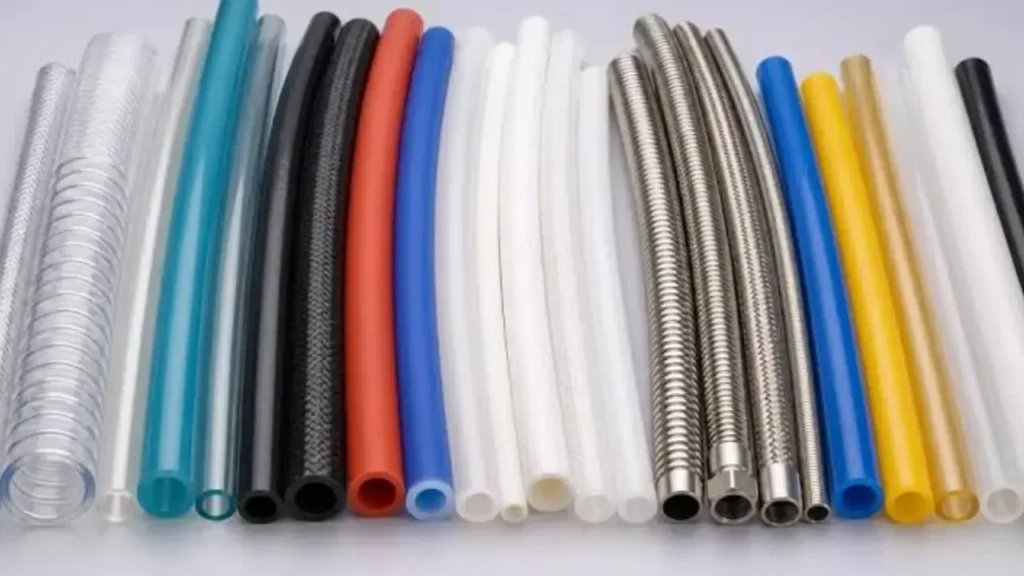
A non-braided hose is a flexible tube made without an external woven reinforcement layer. It typically consists of rubber, PVC, silicone, or another polymer, offering a lightweight, economical solution for low-pressure fluid, air, and water transfer.
Common Uses
- Low-pressure water supply: Non-braided hoses are commonly used for garden watering, irrigation, and general cleaning tasks. Their lightweight design makes them easy to handle, coil, and move around outdoor spaces.
- Air and ventilation: They can transfer low-pressure air, dust, fumes, and light vapors in workshops or ventilation systems. Their flexibility allows simple routing around equipment and confined working areas.
- Automotive fluid lines: Non-braided hoses are suitable for coolant overflow, washer fluid, and low-pressure fuel or vacuum lines. They provide a cost-effective option where extreme pressure and abrasion resistance are not required.
- Laboratory and food applications: Silicone or PVC non-braided hoses can transfer liquids, gases, and mild chemicals in controlled environments. Their smooth inner surface supports clean flow and easy inspection during routine maintenance.
- General industrial transfer: These hoses handle non-corrosive liquids, drainage, and temporary fluid transfer where pressure demands are limited. Their simple construction keeps costs low while still providing dependable performance for light-duty tasks.
Braided vs Non Braided Hose
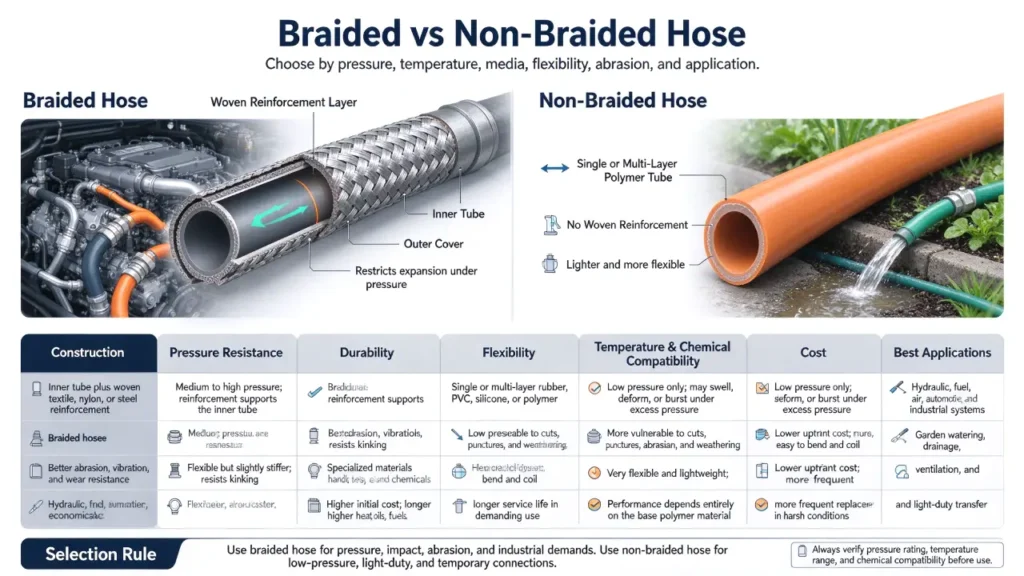
Braided and non-braided hoses are both widely used for fluid, air, and gas transfer, but they are designed for different working conditions. A braided hose includes a woven reinforcement layer, while a non-braided hose relies on its base material alone. Understanding their differences helps you choose the safest and most cost-effective option for your application.
The right hose depends on pressure, temperature, media type, flexibility needs, and exposure to abrasion. Braided hoses generally perform better in demanding environments, while non-braided hoses offer a lighter and more economical solution for low-pressure tasks.
Construction
A braided hose consists of an inner tube, a woven reinforcement layer, and often an outer cover. The braid may be made from textile fibers, nylon, polyester, or stainless steel wire, depending on the application and pressure requirements.
A non-braided hose is usually made from a single layer or multi-layer extrusion of rubber, PVC, silicone, or another polymer. Without a woven reinforcement layer, its structure is simpler, lighter, and generally less expensive to manufacture.
Pressure Resistance
Braided hoses offer higher pressure resistance because the reinforcement layer restricts expansion and supports the inner tube under load. This makes them suitable for hydraulic systems, compressed air, fuel lines, and other medium- to high-pressure applications.
Non-braided hoses are better suited to low-pressure systems. Because they lack reinforcement, excessive pressure can cause swelling, bursting, or deformation, so users must carefully match the hose rating to the working pressure.
Durability and Abrasion Resistance
The braided cover protects the hose from surface wear, cuts, vibration, and repeated handling. This added protection makes braided hoses more reliable in industrial plants, construction sites, automotive environments, and other areas with frequent movement or contact.
Non-braided hoses are more vulnerable to abrasion, punctures, and weathering, especially when dragged across rough surfaces. They can still perform well indoors or in protected installations, but they typically require more careful handling and replacement.
Flexibility and Handling
Braided hoses remain flexible, but the reinforcement layer can make them slightly stiffer than unreinforced options. Their structure helps them resist kinking and collapsing, which is valuable in tight routing and continuous-use applications.
Non-braided hoses are often softer and easier to bend, coil, and maneuver. This makes them convenient for gardening, temporary connections, drainage, and light-duty tasks where maximum flexibility matters more than high pressure performance.
Temperature and Chemical Compatibility
Braided hoses can be engineered with specialized inner tubes and reinforcement materials to handle higher temperatures, oils, fuels, chemicals, and hydraulic fluids. Stainless steel or textile braiding also adds stability when the hose is exposed to heat or movement.
Non-braided hoses depend entirely on the polymer used in their construction. PVC, rubber, and silicone each offer different temperature ranges and chemical resistance, so material compatibility must be verified before use with fuels, oils, solvents, or hot fluids.
Cost and Lifespan
Braided hoses usually cost more because they require additional materials and a more complex manufacturing process. However, their longer service life and reduced risk of failure can make them more economical for demanding or safety-critical applications.
Non-braided hoses have a lower upfront cost and are easy to replace. They are practical for short-term, low-pressure, or non-critical uses, but frequent exposure to pressure, sunlight, or abrasion can shorten their lifespan.
Here is the table showing you the differences between braided and un-braided hoses:
| Aspect | Braided Hose | Non-Braided Hose |
|---|---|---|
| Construction | Inner tube with woven textile, nylon, or steel reinforcement | Single or multi-layer polymer tube without woven reinforcement |
| Pressure rating | Medium to high pressure | Low pressure |
| Durability | Higher resistance to abrasion, vibration, and wear | More vulnerable to cuts, abrasion, and weathering |
| Flexibility | Flexible but slightly stiffer; resists kinking | Very flexible and lightweight; easier to bend and coil |
| Applications | Hydraulic, fuel, air, automotive, and industrial systems | Garden watering, drainage, ventilation, and light-duty transfer |
| Cost and lifespan | Higher initial cost; longer service life | Lower cost; shorter lifespan in demanding conditions |
How to Choose Braided and Non Braided Hose?
Choosing between braided and non-braided hoses depends on your working pressure, fluid type, environment, and budget. Braided hoses provide reinforcement for demanding applications, while non-braided hoses offer a lightweight, economical choice for low-pressure and general-purpose uses.
Key Selection Factors
- Working pressure: Choose a braided hose when your system operates under medium or high pressure, such as hydraulic, fuel, or compressed-air lines. The reinforcement layer prevents expansion and reduces the risk of bursting during operation.
- Fluid or media type: Confirm compatibility with water, oil, fuel, chemicals, air, or hydraulic fluid before purchasing. Braided hoses often use specialized inner tubes, while non-braided hoses must rely entirely on their base polymer for resistance.
- Temperature conditions: For hot fluids, engine compartments, or outdoor heat exposure, select a hose rated for the required temperature range. Braided construction adds stability, while non-braided hoses need careful material selection to avoid softening or cracking.
- Abrasion and movement: Use a braided hose where the hose contacts rough surfaces, vibrates, bends frequently, or faces mechanical wear. Its protective woven layer extends service life in industrial, automotive, and construction environments.
- Flexibility requirements: If you need a hose that is easy to bend, coil, and reposition, a non-braided hose may be more convenient. It works well for gardening, drainage, ventilation, and temporary low-pressure connections.
- Budget and lifespan: Non-braided hoses cost less upfront and suit short-term or non-critical tasks. Braided hoses require a higher initial investment but usually last longer and deliver better reliability in demanding, safety-sensitive applications.
Conclusion
Braided and non-braided hoses serve different purposes, and the right choice depends on pressure, temperature, media, and working conditions. Braided hoses provide superior strength and durability, while non-braided hoses offer flexibility and cost-effective performance for lighter applications.
Before purchasing, always check the hose’s pressure rating, material compatibility, size, and intended environment. Selecting the correct hose prevents leaks, premature wear, and costly downtime, ensuring safer and more efficient operation across industrial, automotive, and agricultural systems.
For dependable wholesale rubber hydraulic hoses, choose Gushan Rubber. We supply high-quality braided and non-braided hose solutions, custom specifications, and reliable fittings to support your business. Contact Gushan Rubber today for durable products, competitive pricing, and professional technical support.